


|
Badge Comparison 2025
Private Investigator vs. Detective BadgesUnderstanding the critical differences between private investigator and law enforcement detective badges – authority, design, legal requirements, and proper credential usage |
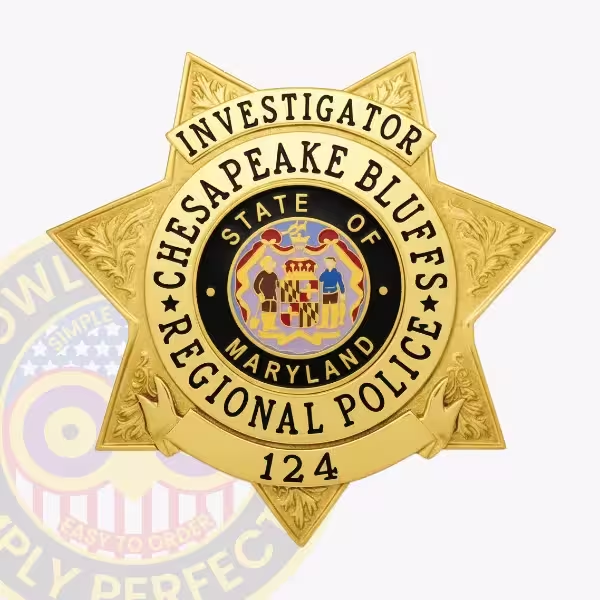 |
The key difference between private investigator and detective badges is employment and authority. Detective badges represent law enforcement officers employed by government agencies with arrest powers, sworn authority, and police academy training. Private investigator badges identify licensed civilian professionals working for private clients without law enforcement powers, arrest authority, or government employment. PI badges must clearly state “Private Investigator” and cannot use law enforcement symbols, colors, or designs. Detective badges display government agency names and carry legal authority that PI badges do not possess.
Understanding the Fundamental Difference
The confusion between private investigator badges and detective badges stems from shared terminology and similar investigative functions. Both professionals investigate cases, gather evidence, and write reports – but the legal authority, employment structure, and credentialing requirements differ dramatically.
This distinction isn’t academic hairsplitting – it’s a critical legal boundary with serious consequences for violations. Private investigators who blur this line face criminal charges for impersonating law enforcement, while citizens who mistake a PI for a detective may believe they’re legally compelled to cooperate when they’re not.
| Characteristic | Private Investigator | Detective |
|---|---|---|
| Employment | Private sector / self-employed | Government law enforcement agency |
| Authority | No arrest powers (most states) | Full arrest powers, sworn officer |
| Clients | Private individuals, attorneys, businesses | Public / government prosecution |
| Training | State licensing requirements (varies) | Police academy + detective promotion |
| Badge Purpose | Identification, professionalism | Symbol of government authority |
| Weapon Authority | Varies by state, requires separate license | Authorized as sworn officer |
What is a Private Investigator?
Private investigators are licensed professionals who conduct investigations for private clients – attorneys, insurance companies, corporations, and individuals. Unlike law enforcement, PIs work in the private sector without government authority or public accountability.
Private Investigator Employment Structure
Self-Employed / Business Owner: Many PIs operate their own investigation agencies, managing their own caseloads and setting their own rates.
PI Agency Employee: Some investigators work as employees for established PI firms, receiving assigned cases and working under the agency’s license.
In-House Corporate Investigator: Large corporations employ internal investigators for fraud prevention, due diligence, and employee investigations.
Contract Investigator: Many PIs work as independent contractors for attorneys, insurance companies, or government agencies on specific cases.
PI Licensing and Credentials
Most states require private investigator licensing, though requirements vary significantly. Learn more about how to become a private investigator and specific licensing requirements by state.
Typical Requirements:
- Minimum age (usually 21-25)
- Clean criminal background
- 1-3 years investigative experience
- State-approved training course
- Passing score on licensing exam
- Liability insurance (in some states)
PI Badge Purpose and Usage
Private investigator badges serve as professional identification, not symbols of authority. PIs present badges to:
- Identify themselves to clients during initial meetings and field work
- Establish professionalism when conducting investigations
- Display licensing credentials including license number and agency name
- Differentiate from amateurs in a field with varying quality levels
What PI badges DO NOT convey:
- Legal authority to detain or arrest
- Government employment or affiliation
- Right to conduct searches or seizures
- Power to compel witness cooperation
- Access to private property without permission
What is a Detective?
Detectives are sworn law enforcement officers who have been promoted from patrol duties to investigative roles. They work for police departments, sheriff’s offices, state police, or federal agencies.
Law Enforcement Career Path
The typical path to detective:
- Police Academy: 6-8 months basic law enforcement training
- Patrol Officer: 2-5 years responding to calls, making arrests, writing reports
- Detective Promotion: Competitive selection process, often requiring exam and interview
- Specialized Training: Additional training in homicide, sex crimes, financial crimes, etc.
- Detective Assignment: Work assigned cases within specialized unit
Detective Authority and Powers
As sworn law enforcement officers, detectives possess substantial legal authority:
- Arrest Authority: Can arrest suspects based on probable cause
- Search Warrants: Can obtain and execute search warrants
- Witness Compulsion: Can subpoena witnesses and compel testimony
- Government Databases: Access to criminal records, DMV data, restricted databases
- Use of Force: Authorized to use necessary force including deadly force
- Prosecution Support: Testify as government witnesses in criminal cases
Detective Badge Meaning
Detective badges symbolize government authority backed by legal powers. These badges:
- Display department name (e.g., “Los Angeles Police Department”)
- Include officer’s badge number (permanent assignment)
- Carry legal weight – presenting a badge demonstrates authority
- Protected by strict impersonation laws
- Issued by government agency, not privately purchased
Badge Design Differences
Beyond employment and authority, the physical badge designs differ substantially to prevent confusion and comply with anti-impersonation laws.
🔍 Private Investigator Badge Design
Text: “PRIVATE INVESTIGATOR” must dominate
Shape: Oval, circle, or non-shield shapes preferred
Colors: Black, gold, silver (avoid blue/red)
Symbols: Magnifying glass, compass (avoid eagles, stars)
Agency: Company name (private business)
Authority: License number (state credential)
👮 Detective Badge Design
Text: “DETECTIVE” with department name
Shape: Shield, star, or traditional police shapes
Colors: Blue, silver, gold (official colors)
Symbols: Eagles, stars, seals, government emblems
Agency: Government department name
Authority: Badge number (officer assignment)
Visual Comparison: Design Elements
| Element | PI Badges | Detective Badges |
|---|---|---|
| Primary Text | “PRIVATE INVESTIGATOR” | “DETECTIVE” or “POLICE” |
| Shield Acceptable | No (most states) | Yes (traditional) |
| Star Acceptable | No (prohibited) | Yes (especially sheriff) |
| Eagle Symbol | No (federal association) | Yes (common) |
| Blue Color | Prohibited/discouraged | Standard |
| Government Seal | Never allowed | Often included |
Legal Authority Differences
The badge isn’t just a visual distinction – it represents fundamentally different legal powers and limitations.
What Private Investigators CAN Do
- Conduct surveillance on public property
- Interview willing witnesses
- Review public records and documents
- Use background check databases (with permission)
- Photograph and video record in public spaces
- Conduct undercover investigations (with restrictions)
- Prepare reports and testify as witnesses
- Work with attorneys on legal cases
What Private Investigators CANNOT Do
- Make arrests (except citizen’s arrest in some states)
- Carry weapons without separate license
- Access private property without permission
- Conduct searches or seizures
- Use flashing lights or sirens on vehicles
- Compel witness cooperation or testimony
- Access restricted law enforcement databases
- Impersonate law enforcement officers
- Claim government authority or affiliation
Violating these limitations can result in criminal charges, license revocation, and civil liability. The badge clarifies boundaries – it identifies you as a PI, not a law enforcement officer.
When Former Detectives Become Private Investigators
Many successful private investigators come from law enforcement backgrounds. The transition offers independence and potentially higher income, but requires understanding new limitations and obtaining new credentials.
The Transition Process
Step 1: Retire or Resign from Law Enforcement
Many states prohibit active officers from operating PI businesses. You must fully separate from law enforcement employment.
Step 2: Obtain PI License
Most states waive experience requirements for former law enforcement but still require licensing. Some states fast-track applications for retired officers.
Step 3: Order New PI Badges
You cannot use your old detective badge. Order new investigator badges that clearly identify you as a private investigator, not law enforcement.
Step 4: Return Department Credentials
Most agencies require return of badge, identification, and department credentials upon separation. Keeping them can constitute theft of government property.
Common Mistakes in Transition
❌ Mistake: Using Old Detective Badge
Continuing to present your detective badge after becoming a PI is illegal impersonation. Even if you earned that badge legitimately, you no longer have the authority it represents.
❌ Mistake: Ambiguous Introduction
Saying “I’m a detective” or “I’m investigating” without clarifying you’re a private investigator misleads people into believing you’re law enforcement.
❌ Mistake: Trading on Former Authority
Allowing witnesses or clients to believe you still have police powers creates liability and potentially criminal exposure.
Client Education: Verifying Credentials
Clients hiring investigators should verify credentials regardless of the badge presented. Here’s how to confirm you’re working with a legitimate professional.
Verification Checklist
- Check State License: Verify the license number with state licensing board
- Confirm Badge Says “Private”: Badge must clearly state “Private Investigator”
- Request Business License: Legitimate PIs operate registered businesses
- Verify Insurance: Ask for certificate of liability insurance
- Review Written Contract: Professional PIs provide detailed service agreements
- Check References: Ask for attorney or corporate client references
Red Flags: Fake or Unlicensed Investigators
- Badge resembles law enforcement too closely
- Refuses to provide license number
- Suggests they have law enforcement powers
- Works only for cash with no contracts
- Cannot provide insurance certificate
- License doesn’t verify with state database
Choosing the Right PI Badge
If you’re a private investigator ordering badges, ensure your design clearly communicates your non-law-enforcement status while maintaining professional credibility.
Design Requirements for Compliance
- “Private Investigator” Text: Largest element on badge, instantly readable
- License Number Display: Clearly visible, minimum 1/4″ height
- Company Name: Your business name, not government agency
- Shape Selection: Oval or circle recommended for universal compliance
- Color Scheme: Black with gold/silver text (avoid blue/red)
- No Law Enforcement Symbols: Avoid stars, eagles, government seals
Use our online badge design tool to create compliant designs, or request design consultation to ensure your badge meets all state requirements while projecting professional authority.
- Detective badges represent law enforcement authority; PI badges are professional identification only
- Detectives are government employees with arrest powers; PIs are private professionals without law enforcement authority
- PI badges must clearly state “Private Investigator” and avoid law enforcement design elements
- Former detectives becoming PIs must obtain new badges and cannot use old detective credentials
- Badge impersonation carries serious criminal penalties including jail time
- Clients should verify PI credentials through state licensing databases
- Proper badge design prevents legal problems while maintaining professional credibility
- The fundamental difference is employment sector and legal authority, not investigative skills
Conclusion
Understanding the distinction between private investigator and detective badges prevents legal problems and ensures proper credential usage. While both professionals investigate cases and serve justice, the badge represents fundamentally different employment structures and legal authority.
If you’re a private investigator, invest in badges that clearly communicate your private status while projecting professional credibility. If you’re a client, verify credentials and understand the difference between hiring private investigation services versus working with law enforcement.
Ready to order compliant private investigator badges? Visit our custom PI badge page or use our online design tool to create state-compliant credentials that establish professionalism without crossing legal boundaries.