
Hoot Hoot! Call For 1st Order Discount 626-412-1200

Buy Police Shields: Custom Law Enforcement Shields Online

Professional Police Shield Manufacturing – Order Custom Police Shields, Purchase Officer Shields

Buy authentic police shields through our online design platform. Order custom law enforcement shields, purchase officer identification shields, and buy department shields featuring seals, rank designations, and individual officer information. Our manufacturing process delivers professional police shields for departments, officers, and collectors nationwide.

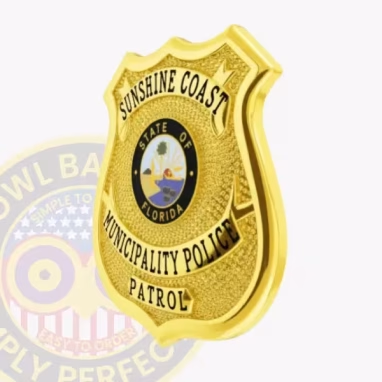
Various police shields and military shields displayed

The Shield Shape in Law Enforcement – History, Symbolism & Modern Use

Historical Shield Origins in American Policing

Shield shape dates to early American law enforcement adopting medieval heraldic traditions in 1800s. Classic shield outline became standard police identification across municipal departments, county agencies, state forces nationwide. Traditional shape represents protection, authority, and public service heritage continuing today.

Shield vs Star Configurations

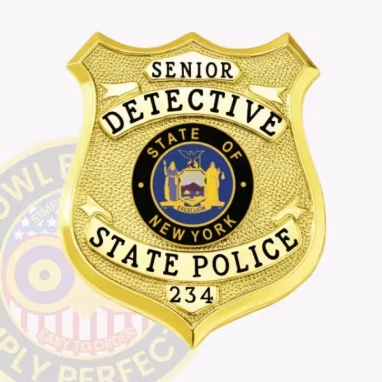
Shield-shaped designs differ fundamentally from star badges in manufacturing and tradition. Shields feature raised outer borders with recessed center fields ideal for department seals and enamel work. Stars require different die construction with pointed elements. Most municipal and county departments choose shields (70% of agencies) while sheriffs traditionally prefer stars.

Modern Shield Design Evolution

Contemporary shield designs maintain traditional outlines while incorporating modern elements. Wider shield profiles accommodate larger department seals and more text fields. Streamlined borders create cleaner appearance for current aesthetics. Traditional narrow shields remain popular for historical continuity while modern wide shields suit departments preferring bold identification.
Shield Die-Striking Process

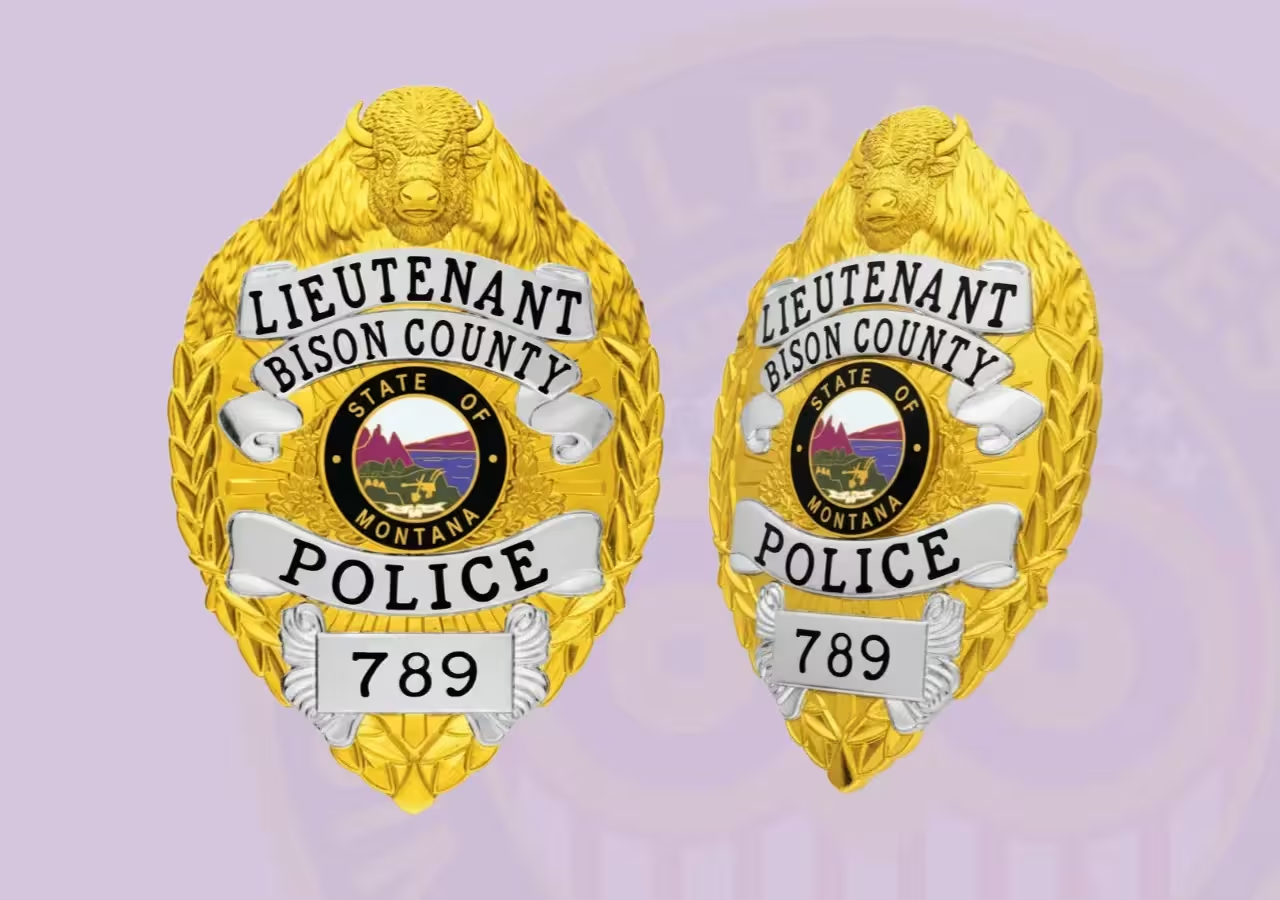
Shield manufacturing requires specialized die-striking creating raised borders and recessed centers in single pressing operation. Border height typically 1-2mm above center field depth. This dimensional variance impossible with flat badge construction. Die costs higher for shields due to dimensional complexity but produces authentic traditional appearance.

Department Seal Integration

Shield center recess designed specifically for department seal placement with enamel application. Recessed field contains colored enamel flush with or slightly below border plane. This traditional shield construction protects enamel from surface abrasion during duty wear. Raised borders frame seal creating professional presentation and functional protection.

Shield-Shaped Badge Configurations – Traditional to Contemporary Designs

Traditional Narrow Shield Profile

Classic narrow shield design 2.5″-3.0″ width by 3.0″-3.5″ height representing historical police identification. Elegant proportions suit traditional departments and dress uniforms. Popular for East Coast municipal departments and agencies maintaining historical continuity. Narrow profile fits uniform pockets and credential wallets easily. $55-$120 per shield with volume discounts.

Standard Duty Shield Profile

Most common shield dimensions 2.75″-3.25″ width by 3.0″-3.5″ height balancing visibility and comfort. Standard proportions accommodate department seals and rank designations without excessive size. Representing 60% of shield orders nationwide across all agency types and sizes. Versatile design suits patrol, detectives, and supervisors. $60-$125 per shield with bulk pricing.

Wide Shield Profile

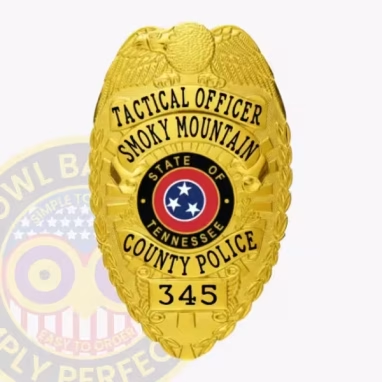
Contemporary wide shield design 3.0″-3.75″ width by 3.25″-3.75″ height providing prominent seal display. Broader proportions suit modern aesthetics and large department emblems with detailed graphics. Popular for West Coast agencies and departments with complex multi-color seals requiring space. Command staff preference for executive appearance. $65-$135 per shield with volume discounts.
Compact Shield Design

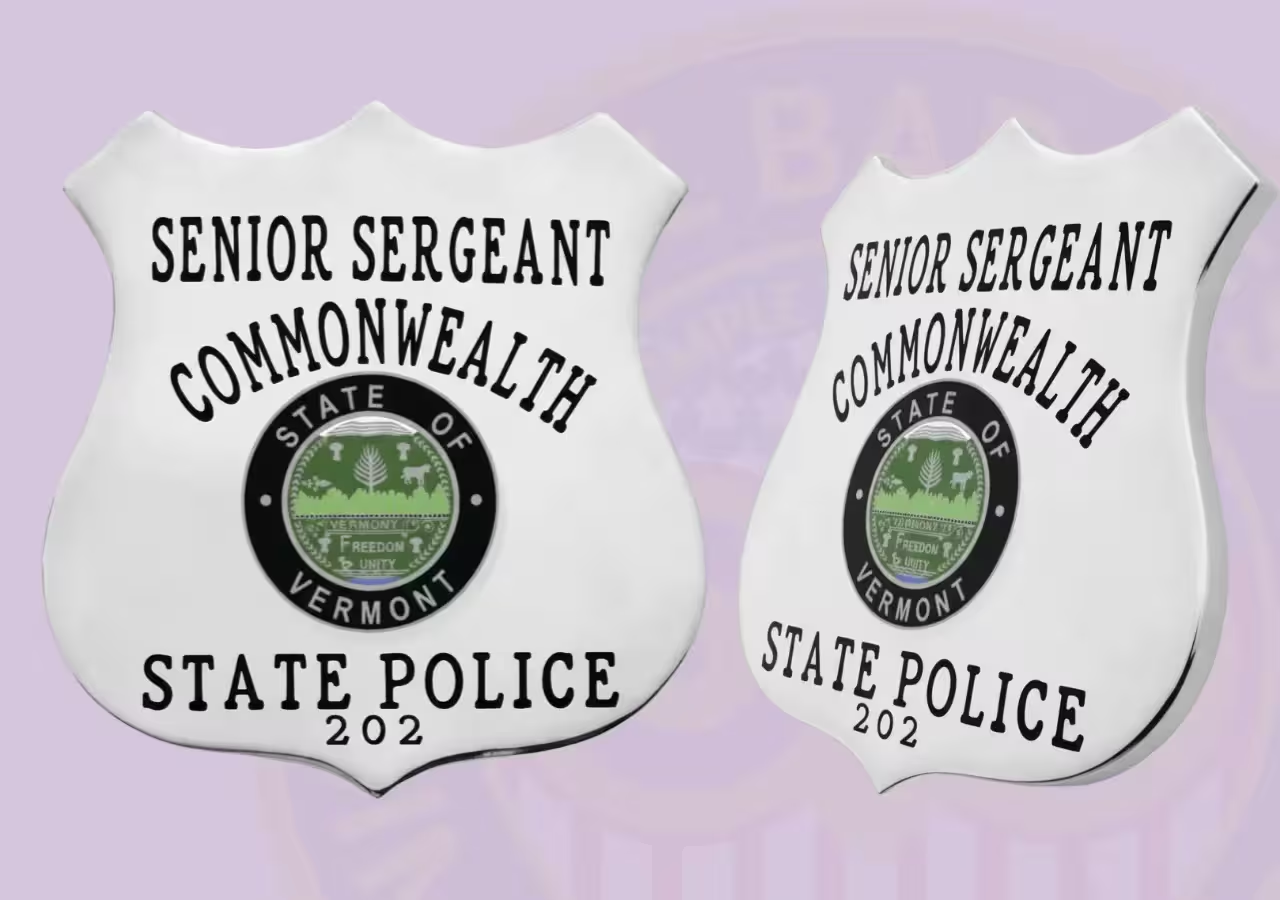
Smaller shield 2.25″-2.75″ width by 2.5″-3.0″ height for detectives and plainclothes personnel requiring discrete identification. Compact proportions fit credential wallets and inside jacket pockets easily. Maintains traditional shield outline in reduced scale. Popular for investigative units and administrative positions. $55-$115 per shield with bulk pricing.
Eagle-Top Shield Variation

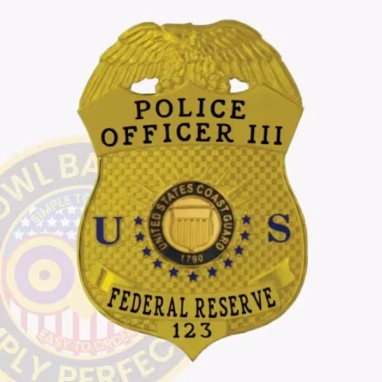
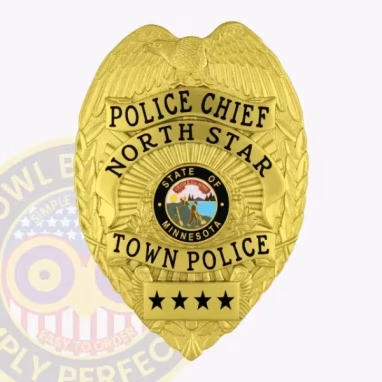
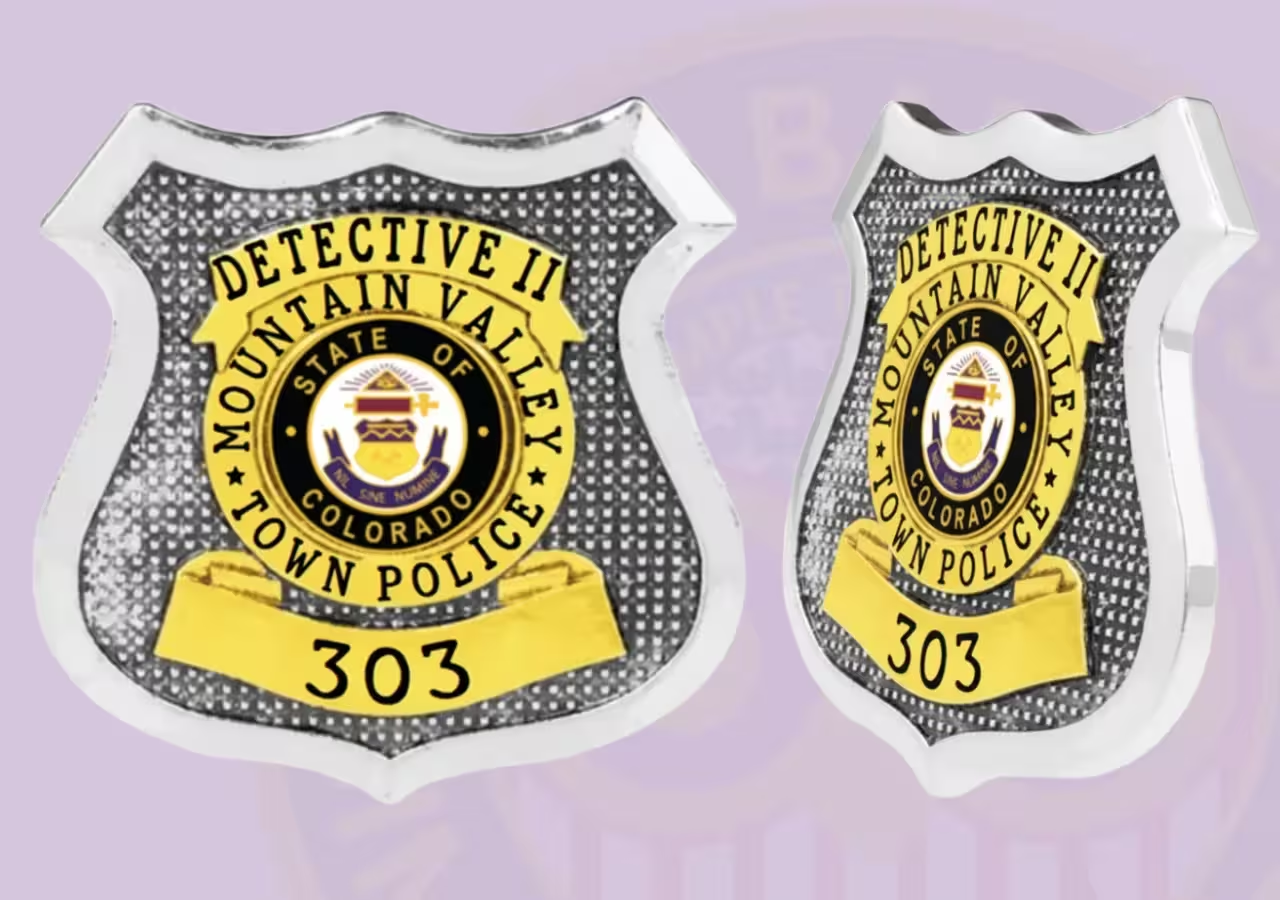
Traditional shield with eagle figure mounted above shield outline creating distinctive profile. Eagle adds 0.75″-1.25″ additional height above standard shield dimensions. Requires separate eagle die and two-part construction increasing manufacturing complexity. Popular for federal agencies, state police, and departments emphasizing national symbolism. $85-$160 per shield with premium pricing for complex dies.

Custom Shield Outlines

Departments may request custom shield outlines reproducing historical designs or creating unique profiles. Custom shapes require dedicated die tooling with one-time setup costs $500-$2,000 depending on complexity. Historical reproduction shields match original 1800s-1900s department designs exactly. Modern custom outlines create distinctive identification unique to specific agency. Production timeline 10-14 weeks includes die creation.

Shield-Specific Manufacturing Process – Traditional Die-Striking Methods

Die Design for Shield Dimensions

Shield dies engineered with raised border elements and recessed center cavities creating dimensional variance characteristic of traditional shields. Die depth typically 1.5-2.5mm from border peak to center base. Computer-aided design ensures precise border profiles and smooth transitions. Die creation 4-6 weeks before production begins.

Progressive Die-Striking Process

Brass blanks undergo multiple striking operations achieving final shield dimensions and details. First strike creates basic outline and border raise. Second strike defines center recess and fine details. Third strike ensures dimensional accuracy and crisp edges. Each strike increases metal compression and dimensional precision.

Border Height & Center Depth Standards

Traditional shield construction maintains specific border/center relationships for authentic appearance. Borders raised 1.0-2.0mm above center field depending on overall shield size. Center recess depth 0.5-1.5mm below border plane. Dimensional variance creates shadows and visual depth characteristic of quality shield construction.

Enamel Field Preparation

Recessed center areas machined perfectly flat and smooth for enamel adhesion. Surface preparation critical for enamel bonding and color accuracy. Recessed depth calculated based on enamel thickness ensuring flush or slightly recessed final surface. Field edges crisp and perpendicular for clean enamel boundaries.

Text Engraving on Shields

Text placement on shields differs from flat designs due to dimensional variance. Text engraved on raised borders stands proud of center recess. Text within center field engraved into recessed surface. Laser engraving accounts for surface angle and depth ensuring consistent appearance. Font sizing adjusted for dimensional positioning.

Quality Control for Dimensional Shields

Shield inspection includes dimensional verification ensuring border height, center depth, overall profile meet specifications. Gauges measure border raise and center recess at multiple points. Visual inspection confirms smooth transitions and crisp edges. Dimensional consistency ensures professional appearance across complete department order.

Reproducing Historical Shield Designs – Authentic Period Recreation

Vintage Shield Analysis

Historical shield reproduction begins with careful analysis of original design including exact dimensions, border profiles, center depth, text placement, seal details. Physical examination identifies die-striking patterns, metal gauge, finish characteristics, attachment methods from original manufacturing period. Detailed documentation guides accurate recreation.

Period-Correct Manufacturing Techniques

Historical shields reproduced using traditional die-striking methods matching original construction. Border profiles, center recess depth, edge treatments replicate period manufacturing capabilities. Modern precision achieves historical appearance while ensuring consistent quality impossible with 1800s-1900s tooling. Result: shields matching original appearance with contemporary reliability.

Antique Finish Application

Historical reproductions often specify antique finishes replicating aged appearance of century-old shields. Chemical patination creates darkened recesses and aged metal appearance. Hand-buffing raises highlights on borders and high points. Antique finish applied over gold or silver plating creates authentic vintage appearance.

Seal Recreation from Historical Examples

Department seals from historical shields recreated through careful artwork reproduction. Hand-tracing converts vintage enamel work to digital artwork. Color-matching identifies original enamel colors accounting for age and oxidation. Modern enamel application reproduces historical appearance with permanent contemporary materials.

Documentation & Authentication

Historical shield reproduction includes documentation verifying accuracy to original designs. Research materials, original shield photographs, dimensional specifications provided to departments. Authentication important for commemorative shields, museum displays, ceremonial use, historical society presentations. Expert consultation ensures period accuracy.

How to Order Shield-Shaped Designs – Simplified 5-Step Process

Step 1: Select Shield Profile & Dimensions

Choose from traditional narrow, standard duty, wide contemporary, compact detective, eagle-top, or custom outline shields. Consider department tradition, uniform requirements, personnel preferences when selecting profile. Review dimensional specifications ensuring size appropriate for intended use. Account manager discusses profile selection and historical considerations.

Step 2: Department Seal Artwork Preparation

Provide existing shield for seal reproduction, upload department seal artwork, or work with design team creating seal from specifications. Shield-specific artwork considers recessed center dimensions and enamel color limitations. Preview seal placement within shield outline before production. Seal artwork approval required before die creation begins.

Step 3: Specify Text, Ranks & Customization

Determine text placement on shield borders and within center recess. Specify officer ranks, badge numbers, individual names as required. Select finish (gold, silver, nickel, antique) and enamel colors matching department standards. Review complete specifications with account manager ensuring all details captured.

Step 4: Review Quote & Submit Order

Receive detailed quote including per-shield costs, volume discounts (30-70%), die costs for custom outlines, shipping, total investment. Production timeline specified with die creation and manufacturing phases. Submit purchase order with NET 30 terms or order online. Artwork and specifications approval before production begins.

Step 5: Production & Delivery

Die creation 4-6 weeks for new designs, shield manufacturing 4-6 weeks following die completion. Total timeline 8-12 weeks standard, 6-8 weeks expedited. Quality control inspection throughout production. Shields delivered in protective packaging with tracking. Account manager confirms delivery and addresses questions. Specifications saved for future reorders.

Expert Shield Design Consultation – Traditional & Custom Configurations

Historical Shield Research Services

Research team assists departments reproducing historical shield designs from photographs, museum examples, archival records, retired shield samples. Investigation includes dimensional analysis, border profile identification, seal reconstruction, finish determination. Consultation ensures authentic reproduction honoring department heritage and historical accuracy.

Shield Profile Recommendations

Account managers provide shield profile recommendations based on department size, traditions, uniform requirements, personnel preferences, budget considerations. Comparison of narrow traditional vs wide contemporary profiles with visual examples. Discussion of regional preferences and historical continuity considerations. Expert guidance ensures optimal shield selection.

Seal Artwork Development

Design team develops department seal artwork specifically for shield applications. Artwork scaled appropriately for recessed center dimensions and enamel application requirements. Complex multi-color seals simplified if necessary while maintaining recognition and symbolism. Color rendering shows appearance within shield outline before production.

Custom Die Feasibility Assessment

Engineering team evaluates custom shield outline requests determining manufacturing feasibility and die costs. Computer rendering shows proposed custom outline with dimensional specifications. Timeline and cost estimates provided for unique die creation. Consultation identifies potential manufacturing challenges before committing to custom tooling investment.

Tradition vs Modernization Guidance

Departments modernizing shield designs receive consultation balancing tradition with contemporary aesthetics. Discussion of maintaining recognizable department identity while updating appearance for current era. Examples from similar departments successfully modernizing shields. Guidance ensures updated designs honor history while meeting modern expectations.

We believe everyone should have better options

Annoying aggressive sales people pressuring you every week to buy
VS
Become an expert, simply design and easily order when you are ready
Unreliable uniform companies wasting your time and money
VS
Order with confidence, free your time and keep more of your money
Worrying about your staff looking bad and both of you being unhappy
VS
Looking their best, your staff will be happy and take pride in their work
CompareOffer CustomizationQuality ProductsOnline Designer50% - 80% Bulk DiscountsEasy To OrderSeal DesignerLive Chat 24/7
Owl Badges
Leading Industry Brands
Uniform Companies
User Friendly Website
Owl badges Award Reef
Best Customer Experience
Owl Badges Award Star
Innovative Website
Owl Badges Trophy Award

What are they saying about us

Ordered police shields for our entire department and the quality is outstanding. The department seal reproduction and professional finishes exceeded expectations. These shields represent our force with pride.

Department-Wide Quality & Professional Pride ⭐⭐⭐⭐⭐

Purchased detective shields for our investigation unit. The classic shield design and gold finish perfectly represent our detective division. Professional appearance and exceptional craftsmanship.

Detective Excellence & Premium Quality ⭐⭐⭐⭐⭐

Bought several police shields for my law enforcement collection. The authentic styling and attention to detail are remarkable. These shields represent the finest quality available for collectors.

Collector Quality & Authentic Details ⭐⭐⭐⭐⭐

Frequently Asked Questions – Shield-Shaped Badge Information

  • What makes shield-shaped designs different from other badge types?

    Shield-shaped designs feature raised outer borders with recessed center fields created through specialized die-striking. This dimensional construction differs fundamentally from flat star badges or circular designs. Recessed center ideal for department seal enamel application with raised borders providing protection and traditional appearance.

  • Can you reproduce our department's historical shield design exactly?

    Yes, we reproduce historical shield designs from physical examples, photographs, or archived documentation. Process includes dimensional analysis, border profile recreation, seal artwork reproduction, period-correct finishes. Modern manufacturing achieves historical appearance with contemporary quality standards. Consultation ensures authentic reproduction honoring department heritage.

  • What's the difference between narrow and wide shield profiles?

    Narrow shields (2.5″-3.0″ width) represent traditional proportions popular historically and continue with East Coast departments. Wide shields (3.0″-3.75″ width) offer contemporary appearance with more space for large seals popular with West Coast agencies. Choice depends on department tradition, aesthetic preference, seal complexity, and regional norms.

  • How much do custom shield outline dies cost?

    Custom shield outline dies range $500-$2,000 one-time cost depending on complexity and dimensional requirements. Simple outline variations toward lower end, complex historical reproductions or eagle-top shields toward higher end. Die cost amortized across shield order with per-shield pricing $55-$150 plus volume discounts 30-70%.

  • What production timeline for shields with new dies?

    Shield production with new die creation requires 8-12 weeks total. Die design and creation 4-6 weeks, shield manufacturing 4-6 weeks following die completion. Expedited timeline 6-8 weeks possible with rush die creation. Reorders using existing dies complete in 4-6 weeks eliminating die creation phase.

  • Do shield-shaped designs cost more than other badge types?

    Shield pricing comparable to other badge types at $55-$150 per shield with 30-70% volume discounts. Custom shield outlines require one-time die costs $500-$2,000 but subsequent reorders no additional die fees. Shield die-striking complexity included in standard pricing. Premium pricing only for highly complex custom outlines or eagle-top variations.

  • Can shields be made in miniature sizes for dress uniforms?

    Yes, miniature collar pin versions reproduce full-size shield outlines in 1.0″-1.5″ dimensions for dress uniform collars. Miniature shields maintain same border raise and center recess in reduced scale. Die-striking process adapted for smaller dimensions. Popular for formal occasions and ceremonial uniforms. $40-$75 per miniature pair with volume pricing.

  • What finishes work best for traditional shield designs?

    Traditional shields typically specify imitation gold plating for classic law enforcement appearance representing 60% of orders. Silver plating popular for contemporary look. Antique finishes (antique gold or silver) create aged appearance for historical reproductions or traditional departments. Dual-tone finishes combine gold borders with silver centers for distinctive appearance.