


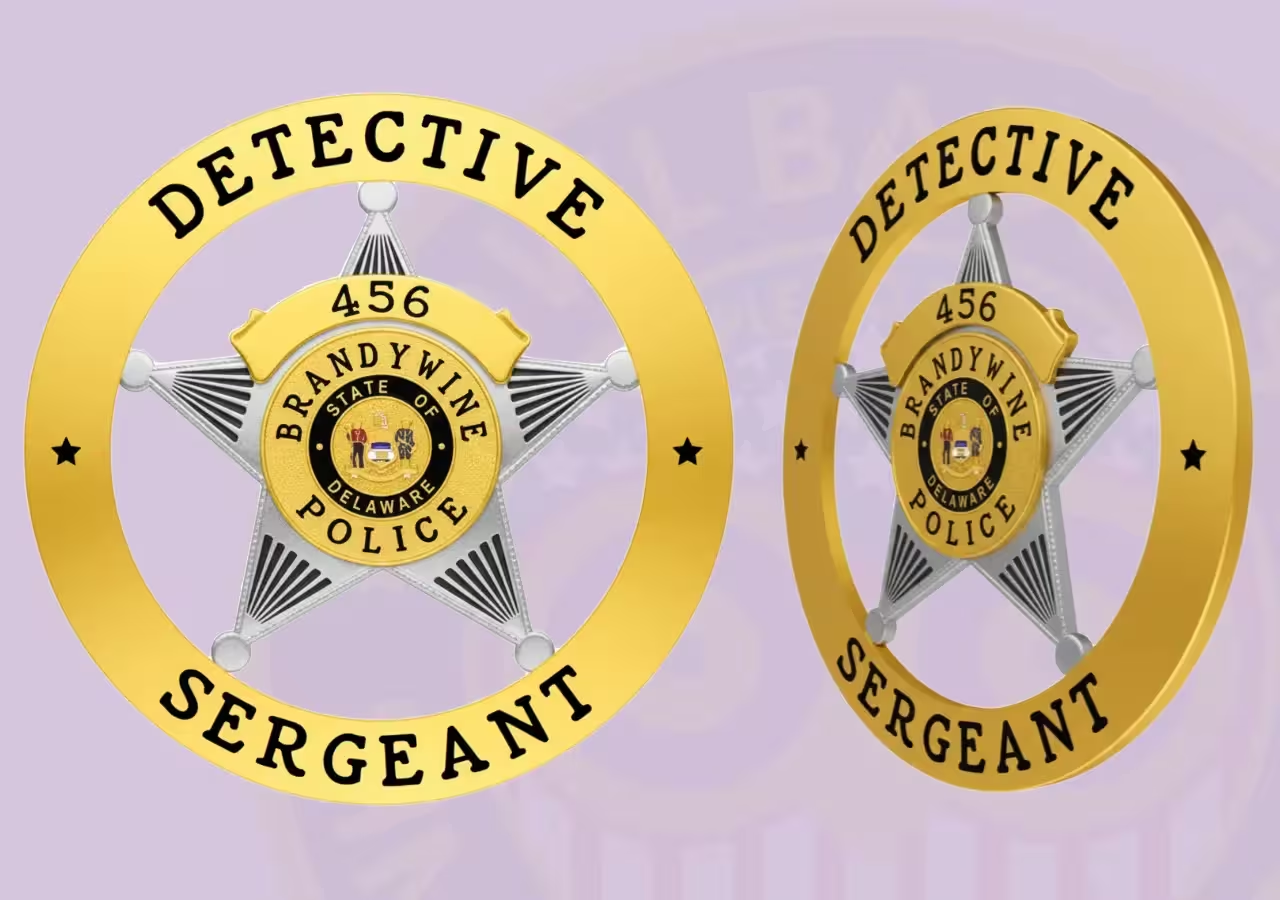
Detective badges are specialized law enforcement credentials worn by plainclothes investigators who handle criminal cases, conduct interviews, gather evidence, and solve crimes. Unlike patrol officer badges, detective badges typically feature shield or oval shapes with “DETECTIVE” prominently displayed, along with the officer’s rank (Detective, Detective Sergeant, Detective Lieutenant), department name, badge number, and often a state seal. Detectives earn their badges through promotion from patrol ranks, typically requiring 3-5 years of experience, and their badges distinguish them as experienced investigators with specialized authority.
Key components of a detective badge showing department, rank, jurisdiction, and identification elements.
What Are Detective Badges?
Detective badges are specialized law enforcement credentials issued to officers who have advanced from patrol duties to investigative roles. Unlike uniformed officers who respond to calls and maintain visible presence, detectives work primarily in plainclothes, conducting investigations, interviewing witnesses and suspects, analyzing evidence, and building cases for prosecution.
The detective badge serves a critical identification function. When working undercover or in plainclothes, the badge provides instant verification of law enforcement authority. Detectives typically carry their badges in leather credential cases alongside photo identification, allowing them to establish their authority quickly when needed while maintaining discretion during investigations.
Most police departments require officers to complete 3-5 years of patrol experience before becoming eligible for detective positions. This requirement ensures detectives understand street-level policing, community dynamics, and criminal behavior patterns before taking on complex investigations. The detective badge represents this experience and the specialized training that follows promotion.
The word “detective” comes from the Latin “detectus,” meaning “uncovered” or “revealed.” This etymology perfectly describes the detective’s role: uncovering hidden truths and revealing what criminals attempt to conceal. Detective badges carry this meaning forward, symbolizing the investigator’s mission to bring truth to light.
Learn more about uniformed officer credentials in our guide to police officer badges.
History of Detective Badges
The history of detective badges parallels the development of professional detective forces in the mid-19th century. Before dedicated detective units existed, criminal investigation was haphazard, often handled by private citizens, gold and silver bounty hunter badgess, or regular patrol officers without specialized training or identification.
The first professional detective force in America was the Pinkerton National Detective Agency, founded in 1850 by Allan Pinkerton. The famous “eye that never sleeps” logo became an early form of detective identification, though private detectives of this era used various credentials rather than standardized badges.
The New York City Police Department established the first municipal detective bureau in 1857, just 12 years after creating the city’s first professional police force. These early NYPD detectives wore distinctive badges that set them apart from uniformed officers, establishing the tradition of separate detective credentials that continues today.
By the late 1800s, most major American cities had established detective divisions with their own badge designs. The shield shape became increasingly popular for detective badges during this period, distinguishing investigative personnel from patrol officers who more commonly wore star-shaped badges.
The 20th century brought professionalization and standardization to detective credentials. The emergence of forensic science, fingerprint analysis, and modern investigative techniques elevated the detective’s role, and badge designs evolved to reflect this specialized status. Gold finishes became increasingly common for detectives, signifying their advancement beyond patrol ranks.
Today’s detective badges incorporate modern security features while maintaining traditional design elements that connect current investigators to their historical predecessors. The shield shape, eagle emblems, and prominent “DETECTIVE” designation remain hallmarks of investigator credentials across American law enforcement.
Detective vs. Patrol Officer Badges
Detective badges differ from patrol officer badges in several important ways, reflecting the distinct roles these positions play within police departments. Understanding these differences helps clarify why detective credentials have developed their unique characteristics and why departments maintain separate badge designs for investigative personnel.
The most obvious difference is the prominent “DETECTIVE” designation that appears on investigator badges. While patrol officer badges may simply read “POLICE” or “OFFICER,” detective badges clearly identify the wearer’s investigative role. This distinction becomes critical when detectives work in plainclothes and need to establish authority quickly.
| Feature | Patrol Officer Badge | Detective Badge |
|---|---|---|
| Primary Shape | Star or shield | Shield, oval, or eagle-top |
| Typical Finish | Silver for patrol, gold for supervisors | Often gold or two-tone |
| Rank Display | “POLICE” or “OFFICER” | “DETECTIVE” prominently shown |
| Primary Use | Worn on uniform | Carried in credential case |
| Attachment | Chest-mounted pin back | Wallet clip or belt carrier |
Detective badges are typically designed for wallet-style credential cases rather than uniform mounting. This design consideration reflects how detectives work—carrying identification in a case that can be quickly displayed when needed, then returned to a pocket or belt holder. The badge and photo ID work together as a complete credential package.
Many departments use distinct badge shapes to differentiate detectives from patrol officers at a glance. While patrol officers might wear star badges, detectives in the same department might wear shield-shaped credentials. This visual distinction helps other law enforcement personnel and the public quickly identify the officer’s role.
Detective Badge Shapes and Styles
Detective badges appear in several distinct shapes, each with its own history, symbolism, and regional associations. While shield designs dominate, oval and star shapes also serve detective divisions across the country. The choice of shape often reflects departmental tradition, regional preferences, or deliberate differentiation from patrol credentials.
Common detective badge shapes with approximate usage across U.S. law enforcement agencies.
Shield Badges
The shield shape dominates detective badge design, particularly in the Northeast and major metropolitan departments. The shield symbolizes protection—both the detective’s role in protecting the community and the authority that protects the investigator while carrying out duties. Most shield detective badges feature eagle-top designs, adding patriotic symbolism and visual distinction.
Oval Badges
Oval detective badges offer a classic, formal appearance favored by many departments in the Midwest and some Eastern cities. The oval shape provides excellent text legibility and a distinguished appearance. Many departments use oval badges specifically for detective divisions while patrol officers wear other shapes, creating clear visual differentiation.
Star Badges
Star-shaped detective badges appear primarily in Western and Southern states, continuing the frontier law enforcement traditions. Texas and California detective divisions commonly use star designs. The five-point, six-point, and seven-point star variations all appear in detective credentials, often matching the star style used by patrol officers in the same department.
Explore more badge shapes in our complete badge design gallery.
Detective Rank Structure
Detective divisions maintain their own rank structures that often parallel but remain distinct from patrol hierarchies. Understanding these ranks helps clarify how detective badges communicate position and authority within investigative units. Badge designs typically reflect rank through finish, text panels, and sometimes distinct design elements.
| Detective Rank | Responsibilities | Badge Characteristics |
|---|---|---|
| Chief of Detectives | Commands entire detective bureau | Gold, distinctive design |
| Detective Captain | Division commander | Gold finish |
| Detective Lieutenant | Unit commander, case oversight | Gold or gold/silver |
| Detective Sergeant | First-line supervisor, squad leader | Gold or two-tone |
| Detective First Grade | Senior investigator, major cases | Gold or silver |
| Detective Second Grade | Experienced investigator | Silver or two-tone |
| Detective Third Grade | Entry-level detective | Silver |
The NYPD uses a unique “grade” system for detectives (First, Second, Third Grade) that’s tied to both experience and pay scale rather than supervisory responsibility. Detective First Grade is the highest non-supervisory rank and is typically awarded for exceptional investigative work. Other departments may use similar grade distinctions or simply distinguish between “Detective” and supervisory detective ranks.
Specialized Detective Units
Modern police departments organize detectives into specialized units that focus on particular crime categories. These units often have distinctive badges or badge modifications that identify their specialization. Understanding these units helps clarify the variety of detective credentials and their specific purposes.
Homicide Division
Homicide detectives investigate murders and suspicious deaths. These units typically include the department’s most experienced investigators. Homicide detective badges may feature “HOMICIDE” designation or unit numbering. Some departments use distinctive finishes or design elements for homicide credentials.
Major Crimes / Robbery
Major crimes units handle serious felonies including armed robbery, burglary rings, and organized criminal activity. Detectives in these units often work high-profile cases that attract media attention. Their badges typically reflect the general detective division design with unit-specific numbering.
Special Victims Unit
Special victims units (SVU) investigate crimes against vulnerable populations, including child abuse, sexual assault, and elder abuse. Detectives in these units receive specialized training in victim interview techniques and trauma-informed investigation. SVU badges may include specific unit identification.
- Homicide: Murder and death investigations
- Financial Crimes: Fraud, embezzlement, white-collar crime
- Narcotics: Drug trafficking and distribution
- Gang Unit: Gang-related criminal activity
- Cyber Crimes: Computer fraud, identity theft, online crimes
- Cold Case: Unsolved historical cases
For information about private sector investigation credentials, see our private detective badges guide.
Badge Design Elements
Detective badges incorporate multiple design elements that work together to create distinctive, professional credentials. Each element serves specific identification and symbolic purposes. Understanding these components helps departments design effective detective badges that properly represent their investigative divisions.
Text Panels
Detective badges typically include 3-5 text panels containing essential identification information. The “DETECTIVE” designation appears prominently, often larger than other text. Department name and jurisdiction (city, county, or state) identify the employing agency. The badge number provides individual identification for accountability and records purposes.
Center Design
The badge center typically features a state seal, city seal, or department emblem. This element provides instant geographic identification and official authority. State seals connect the detective’s authority to state government, while city seals emphasize local jurisdiction. Some departments use custom emblems incorporating local symbols or department history.
Eagle Emblems
Eagle-top designs add patriotic symbolism and visual distinction to detective badges. The American eagle represents national authority and the detective’s role in upholding the law. Eagle emblems appear in various styles from realistic detailed renderings to stylized interpretations. Some departments reserve eagle-top badges for detective ranks while patrol officers wear simpler designs.
✅ Essential Badge Elements:
- Clear “DETECTIVE” rank designation
- Department and jurisdiction identification
- Individual badge number
- State or city seal for authority
❌ Design Mistakes to Avoid:
- Overcrowded text that reduces legibility
- Low-contrast finishes that hide details
- Missing jurisdiction identification
- Inconsistent design across ranks
Materials and Finishes
Detective badges are crafted from brass or zinc alloy with professional plating. Gold finishes indicate senior ranks or supervisory positions in most departments. Silver finishes serve entry-level detective positions. Two-tone combinations (gold body with silver panels, or vice versa) create visual interest while maintaining professional appearance. Black finishes have become popular for tactical and undercover units.
Learn about credential accessories in our badge holders guide.
Frequently Asked Questions
❓ How do you become a detective?
Becoming a detective typically requires 3-5 years of experience as a patrol officer, a strong performance record, and passing a competitive promotion exam. Many departments require additional education (associate’s or bachelor’s degree) and specialized training. After promotion, new detectives usually complete investigator training programs before receiving their detective badge and full investigative duties.
❓ Why do detectives carry badges in wallets instead of wearing them?
Detectives work primarily in plainclothes rather than uniforms, so a chest-mounted badge would compromise their ability to conduct surveillance or approach subjects without being immediately identified as police. The wallet-style credential case allows detectives to quickly display their badge and photo ID when establishing authority, then return it to a pocket for discretion during investigations.
❓ What is the difference between a detective and an investigator?
The terms are often used interchangeably, though some departments use “investigator” for specific roles. Generally, “detective” refers to sworn police officers who investigate crimes, while “investigator” may include non-sworn personnel or those working in specialized fields like insurance fraud or corporate security. Both may carry badges, though design and authority differ significantly.
❓ Do federal agents carry detective badges?
Federal agents carry credentials specific to their agencies (FBI, DEA, ATF, etc.) rather than “detective” badges. However, federal agent badges serve similar functions and often feature shield or eagle-top designs comparable to municipal detective badges. The title “Special Agent” is the federal equivalent of detective for investigative roles.
❓ Can private investigators have detective badges?
Private investigators can carry badges identifying them as licensed private investigators, but these must be clearly distinct from police detective badges. Most states regulate PI badge design to prevent confusion with law enforcement credentials. PI badges typically use “PRIVATE INVESTIGATOR” or “PRIVATE DETECTIVE” text and cannot include police department names or official government seals.
- Detective badges identify plainclothes investigators and are typically carried in credential cases rather than worn on uniforms.
- Detectives earn their badges through promotion after 3-5 years of patrol experience and specialized investigative training.
- Shield shapes dominate detective badge design, with oval and star variations appearing in different regions.
- Detective ranks include grades (First, Second, Third) and supervisory positions (Sergeant, Lieutenant, Captain).
- Specialized units (Homicide, Financial Crimes, Narcotics, SVU) may have distinctive badge identifiers.
- Gold finishes typically indicate senior detective ranks, while silver serves entry-level detective positions.
- Essential badge elements include “DETECTIVE” designation, department name, jurisdiction, and badge number.
- Eagle-top designs add patriotic symbolism and visual distinction to detective credentials.
Conclusion
Detective badges represent the advancement from patrol duties to specialized criminal investigation, carrying both practical identification functions and symbolic meaning. The shield shapes, eagle emblems, and prominent “DETECTIVE” designations connect modern investigators to over 150 years of American detective tradition while serving essential identification purposes in plainclothes work.
Whether designing badges for a new detective unit or understanding existing credentials, the key considerations remain consistent: clear rank identification, proper jurisdictional authority, and professional appearance that commands respect while maintaining the discretion essential to investigative work.
Related Articles
Police Officer Badges Guide
Complete guide to patrol officer badge design and specifications.
Private Investigator Badges
Credentials for licensed private investigation professionals.
Badge Holders Guide
Credential cases and carrying options for detective badges.
Written by
Robert Chen
Law Enforcement Credentials Specialist
Published: February 10, 2025
Last Updated: December 21, 2025
Tags: