


Department Resource Guide
Police Badge Number: Design, Placement & Customization
A practical guide for law enforcement agencies on badge number specifications, placement options, and design best practices.
A police badge number is a unique identifier displayed on law enforcement badges. When designing custom badges, departments must decide on number placement (center, bottom panel, or integrated), format style (numeric only, alphanumeric, or coded), character size for visibility, and finish type. Most departments use 3-6 digit numbers positioned in the bottom third of the badge with characters at least 3/16″ tall for readability.
Three common placement options for police badge numbers, each with different advantages.
Badge Number Placement Options
The placement of a police badge number affects both aesthetics and functionality. Where you position the number impacts how easily it can be read during citizen encounters and how well it integrates with your overall badge design.
Bottom Panel Placement
The most popular choice for police officer badges. A dedicated panel at the bottom of the badge displays the number prominently. This placement keeps the number separate from other badge elements, making it easy to read at a glance. Bottom panel numbers typically use the largest character sizes since space allows for it. You should understand the police 10 police codes too.
Center Integration
Traditional sheriff badges and classic designs often place the number within a central seal or medallion. This creates a more integrated, formal appearance but may reduce readability at distance. Center placement works well for star-shaped badges where the center provides natural focal point.
Top Banner Placement
Less common but used by some agencies, top placement positions the badge number above the title or rank. This can work well when the number serves as a primary identifier or when rank designation appears in the center. Detective badges sometimes use this approach.
For maximum visibility and accountability, bottom panel placement is recommended. It allows for larger numbers and keeps the identifier clearly separated from other badge text.
Number Format Styles
How you structure the badge number itself depends on your department’s size, organizational structure, and tracking needs. Understanding what badge numbers mean helps inform your format choice.
| Format Style | Example | Best For | Considerations |
|---|---|---|---|
| Numeric Only | 1234 | Small to mid-size departments | Simple, easy to communicate verbally |
| Alphanumeric | P-1234 | Multi-division departments | Letter prefix indicates division/rank |
| Coded Segments | 3-12-456 | Large city departments | Encodes rank, precinct, and ID |
| Year Suffix | 1234-19 | Agencies tracking hire cohorts | Last digits show hire year (2019) |
| Sequential | 47 | Small departments, sheriff offices | Shows seniority; lower = longer tenure |
Character Count Considerations
The number of characters affects badge design significantly:
- 2-3 digits: Maximum size possible, ideal for small departments
- 4-5 digits: Standard for most mid-size agencies, good balance of size and capacity
- 6+ digits: May require smaller font or creative placement, common in large metros
- With separators: Hyphens or periods add visual clarity but take space (3-12-456 vs 312456)
Size and Visibility Standards
Badge number visibility matters for accountability purposes. Citizens should be able to read the number during normal interactions. Some jurisdictions have specific requirements for minimum character heights.
Recommended Minimum Sizes
3/16″
Minimum Height
Readable at arm’s length
1/4″
Recommended Height
Good visibility at 3-4 feet
5/16″
Optimal Height
Easy reading at distance
Contrast Requirements
The number must contrast clearly with its background:
- Gold badge, dark numbers: Black or dark blue enamel fill provides excellent contrast
- Silver badge, dark numbers: Black engraving or enamel works well
- Dark panel, light numbers: Gold or silver raised numbers on black/blue panel
- Avoid: Similar tones (gold numbers on yellow, silver on white)
Some jurisdictions require badge numbers to be visible and readable. Decorative fonts, overly small sizes, or poor contrast may violate local regulations and undermine public trust. Check your state’s requirements.
Design specifications for badge numbers including font styles, finishes, and size references.
Finish and Material Options
How the badge number is rendered affects durability, appearance, and cost. Each method has advantages depending on your agency’s priorities.
Raised/Embossed Numbers
The number sits above the badge surface. This creates a dimensional, premium appearance and is highly durable since there’s no fill that can wear away. Raised numbers catch light and are easily felt by touch. This is the traditional choice for high-quality law enforcement badges.
Engraved/Recessed Numbers
Numbers are cut into the badge surface. This creates a subtle, professional look. Engraved numbers can be left plain (showing the base metal) or filled with enamel for contrast. Recessed numbers are protected from surface wear since they sit below the badge face.
Enamel-Filled Numbers
Colored enamel fills either raised or recessed number areas. Black enamel on gold is classic. Blue enamel provides a distinctive look. Enamel adds color contrast and a polished appearance but requires care—harsh impacts can chip the enamel over time.
For patrol officers who experience daily wear, raised numbers without enamel offer the best long-term durability. For ceremonial or administrative badges, enamel-filled provides a more refined appearance.
Number Placement by Badge Shape
Different badge shapes have traditional number placement patterns. While these aren’t absolute rules, following conventions helps maintain a professional, recognizable appearance.
| Badge Shape | Common Placement | Typical Users |
|---|---|---|
| Shield/Eagle Top | Bottom panel below center seal | City police, state troopers |
| 5-Point Star | Center circle or bottom point | Sheriff departments, Texas agencies |
| 6-Point Star | Center medallion | Sheriff, constable |
| 7-Point Star | Center or bottom banner | California agencies, Western states |
| Oval/Sunburst | Bottom third, curved panel | Detectives, federal agencies |
| Circle/Round | Lower arc following badge curve | Security, campus safety |
The Design Process
When working with a badge manufacturer on your police badge number specifications, follow these steps to ensure the best results.
Step 1: Determine Your Numbering System
Before designing badges, establish your badge numbering system. Decide on format (numeric vs. alphanumeric), number of digits needed for your agency’s size and growth, and whether numbers will encode information like rank or division.
Step 2: Select Placement and Size
Choose where the number will appear on your badge design. Consider visibility requirements, aesthetic balance with other elements, and space constraints based on your maximum number length.
Step 3: Choose Finish and Style
Decide between raised, engraved, or enamel-filled numbers. Select a font style that matches your agency’s character—block for modern departments, serif for traditional agencies.
Step 4: Review Sample or Proof
Before ordering full production, request a sample badge or detailed proof showing exactly how the number will appear. Check readability, contrast, and overall appearance. Make sure the number displays correctly with both low (like “12”) and high (like “12345”) digit counts.
Design your number panel to accommodate future growth. If you currently use 3-digit numbers but may expand, ensure the space can fit 4 digits without requiring a badge redesign.
Frequently Asked Questions
❓ Can badge numbers be changed after the badge is made?
Generally, no. Engraved and raised numbers are permanent. Some manufacturers offer badges with removable number plates, allowing the same badge body to be reused with different numbers—useful for agencies with high turnover or that reassign numbers.
❓ What’s the most durable option for badge numbers?
Raised numbers without enamel are most durable since there’s no fill to chip or wear. Die-struck brass with gold or nickel plating provides excellent longevity. Engraved numbers with hard enamel fill are also very durable when properly cured.
❓ Are there legal requirements for badge number visibility?
Requirements vary by jurisdiction. Some states and cities mandate that badge numbers be visible and readable. Check with your state POST (Peace Officer Standards and Training) board or legal counsel for specific requirements in your area.
❓ Should different ranks have different number formats?
Many departments use the same format across all ranks for simplicity. Others use prefixes (S-101 for sergeants, L-101 for lieutenants) or different number ranges. Consistency makes record-keeping easier, but coded formats can provide quick rank identification.
❓ How do I order badges with custom numbers?
Badge manufacturers typically allow you to specify individual numbers for each badge in an order. Provide a list or spreadsheet with officer names and their assigned numbers. Most manufacturers can accommodate any numbering system you’ve established.
- Bottom panel placement offers the best visibility for badge numbers
- Minimum 3/16″ character height ensures readability; 1/4″ or larger is recommended
- High contrast between numbers and background is critical for accountability
- Raised numbers without enamel provide maximum durability for patrol use
- Plan for growth—design number space to accommodate future expansion
- Check local requirements for any mandated visibility standards
- Request a sample before full production to verify appearance
📚 Related Resources
Browse Badge Categories
Written by
Michael Torres
Badge Design Specialist
Published: December 2025
Last Updated: December 2025
Tags:
-

 STR14-E1
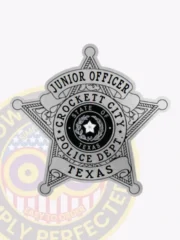
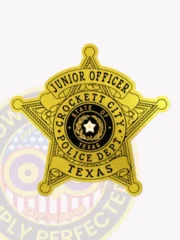
Design Your Junior Sticker Badges Star in Circle
Create your custom junior sticker badges using our user-friendly online designer. Our 5-point star badges features 4 panels for customization and a center seal for adding logo or state seal. Follow our simple steps to select your color, add department information, and text details. Take advantage of volume discounts. Work at your pace – save multiple designs or proceed to checkout when satisfied.
5 Point Star Sticker Badge STR14-E1
$0.20 - $2
Matching Product:
-
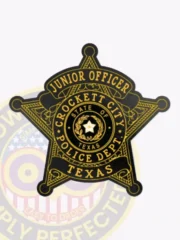
STR20-A19
Design Your Junior Sticker Badges Star in Circle
Create your custom junior sticker badges using our user-friendly online designer. Our 5-point star in circle badges features 2 panels for customization and a center seal for adding logo or state seal. Follow our simple steps to select your color, add department information, and text details. Take advantage of volume discounts. Work at your pace – save multiple designs or proceed to checkout when satisfied.
5 Point Star Sticker Badge STR20-A19
$0.20 - $2
Matching Product:
-

 19-F3
19-F3Fraternal Order Of Police badge for Cleveland, Ohio
6 Point Star Badge 19-F3
$25 - $150
Matching Product:
-
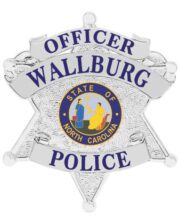
19-H20
The most popular police badges and security badges. Wear on shirts, jackets and badge holders.
6 Point Star Badge Circle Banner
$25 - $150
Matching Product:




Our Clients
Trusted Nationwide
Trusted by over 5,000 organizations and agencies worldwide