


Badge Encyclopedia
Cop Badges: Complete Guide to Police Officer Credentials
Understanding the design, symbolism, and rank structure of law enforcement badges across departments.
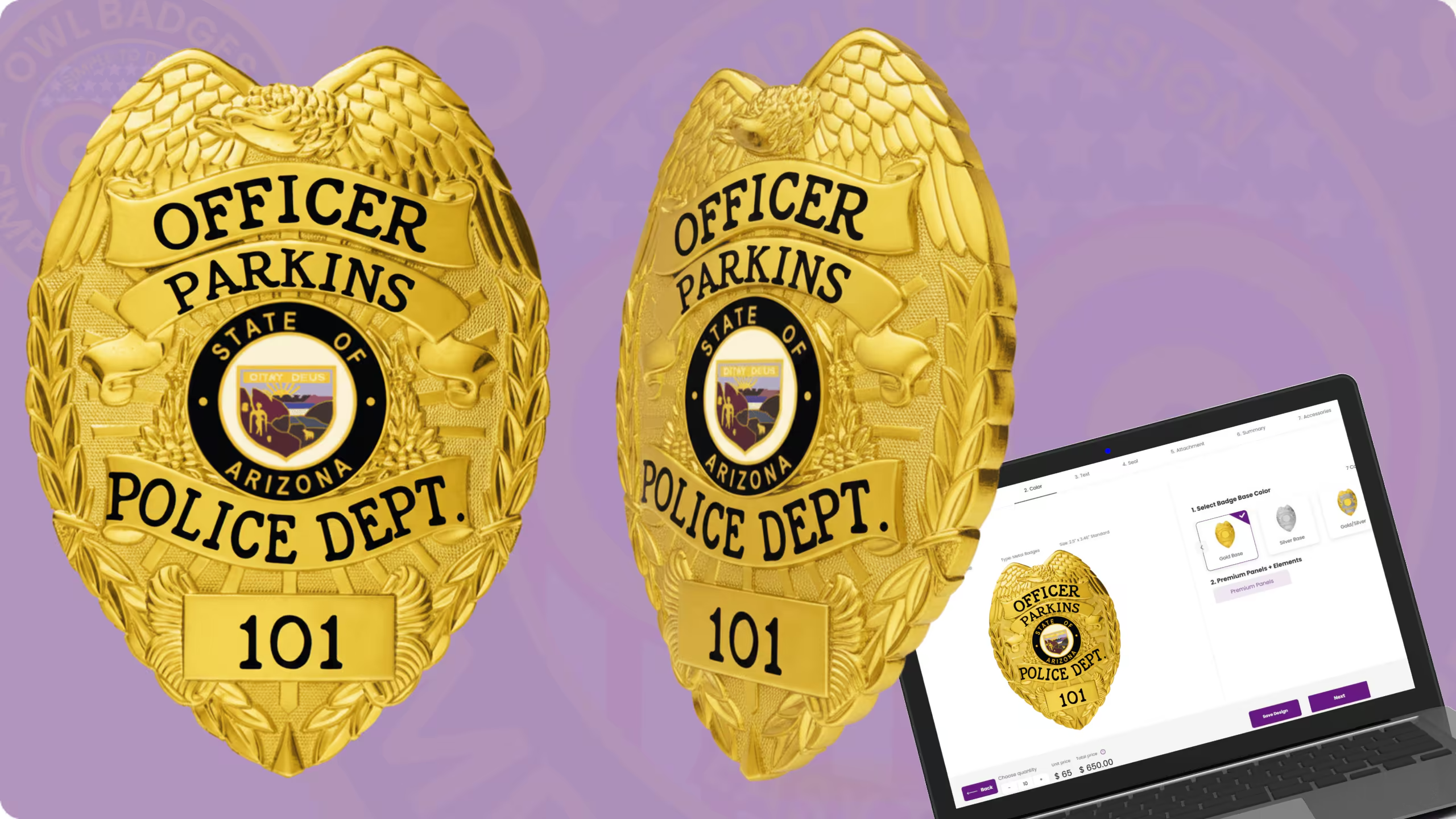
Cop badges are official credentials worn by police officers to identify their authority, rank, and department affiliation. These badges typically feature shield or star shapes with department seals, badge numbers, and rank designations. Made from durable metals like brass or nickel silver, cop badges serve as both legal identification and symbols of the oath officers take to serve and protect their communities.
Overview of common cop badge shapes, regional preferences, and metal finish options by rank
History of Cop Badges in America
The history of cop badges in America traces back to the early 19th century when organized police forces first emerged in major cities. Boston established the first formal police department in 1838, followed by New York City in 1845. These early officers needed visible identification to distinguish themselves from ordinary citizens, leading to the adoption of metal badges as official credentials.
Early cop badges were simple affairs, often just metal discs or stars stamped with basic identification. As police departments grew and professionalized throughout the late 1800s, badge designs became more elaborate, incorporating city seals, department mottos, and increasingly sophisticated manufacturing techniques. The shield shape became popular in Eastern cities, while Western departments favored star designs reminiscent of frontier lawmen.
The term “cop” likely originated from the copper badges worn by early police officers in the mid-1800s, or from the verb “to cop” meaning to capture or seize. Some historians trace it to the copper buttons on early police uniforms. Regardless of origin, the term became synonymous with police officers by the late 19th century.
The 20th century brought standardization to cop badge design as departments established formal rank structures and identification protocols. The introduction of badge numbers created accountability systems that persist today. Modern cop badges incorporate security features, department-specific designs, and materials engineered for decades of daily wear. Learn more about the evolution of police badge design and history.
Today’s cop badges represent a balance between tradition and functionality. While designs honor historical precedents, modern manufacturing ensures durability, security, and professional appearance. Each badge tells a story of the department it represents, the community it serves, and the officer who carries it as a symbol of their sworn duty.
Cop Badge Design Elements and Symbolism
Every element on a cop badge carries specific meaning and serves identification purposes. Understanding these components helps appreciate the careful design considerations that go into creating credentials that officers carry throughout their careers.
The center seal typically features the department’s official emblem, city seal, or state symbol. This central element establishes jurisdiction and authority at a glance. Surrounding the seal, text rings identify the department name, city, county, or state, ensuring clear organizational affiliation.
Badge numbers serve as unique identifiers linking each cop badge to a specific officer’s personnel records. These numbers enable accountability, complaint tracking, and commendation systems. Some departments retire badge numbers of officers killed in the line of duty as a permanent honor.
Text panels on cop badges display critical information including rank titles, division assignments, and badge numbers. Panel placement follows department-specific conventions, with rank typically appearing prominently near the top or center. Badge numbers usually occupy a dedicated panel at the bottom or within the design.
Border designs range from simple polished edges to elaborate laurel wreaths, rope patterns, or decorative scrollwork. These borders add visual distinction while protecting the badge’s main elements from wear. Premium badges feature hand-finished borders that demonstrate quality craftsmanship.
Color elements through enamel work add department colors, state flag elements, or specialized unit identification. Hard enamel provides durability for daily wear, while soft enamel creates dimensional effects. Some departments use color coding to distinguish rank levels or specialized assignments at a glance. Explore the variety of police officer badge designs available.
Common Cop Badge Shapes by Region
Regional traditions significantly influence cop badge shapes across the United States. These preferences developed over more than 150 years of American policing history, creating distinctive regional identities that departments maintain today.
| Badge Shape | Primary Regions | Notable Departments | Characteristics |
|---|---|---|---|
| Shield | East Coast, Midwest | NYPD, Chicago PD, Boston PD | Maximum text space, formal appearance |
| 7-Point Star | California, West Coast | LAPD, California Sheriffs | Iconic Western style, circular text rings |
| 5-Point Star | Texas, Southwest | Texas Rangers, Texas PDs | Frontier heritage, bold presence |
| 6-Point Star | Midwest, Various | Sheriff Departments | Traditional sheriff style |
| Eagle Top | Nationwide | Various Command Staff | Ceremonial, senior ranks |
| Oval/Circle | Various | Transit, Campus Police | Compact, specialized units |
The shield shape dominates East Coast and Midwest departments, reflecting European police traditions brought by early immigrants. New York City’s iconic shield design has influenced countless departments across the region. Shield badges offer maximum text space and formal appearance suited to urban police work.
Star badges carry the legacy of frontier law enforcement. The 7-point star became synonymous with California law enforcement, particularly the Los Angeles Police Department and county sheriff offices. The 5-point star maintains strong associations with Texas and Southwestern policing traditions. Learn more about sheriff badge styles and their regional variations.
Modern departments may choose shapes based on historical precedent, practical considerations, or desire to establish distinctive identity. Some agencies have modernized traditional shapes while others strictly maintain century-old designs that connect current officers to departmental heritage.
Detailed breakdown of cop badge components showing standard shield design with department identification elements
Police Rank Structure and Badge Variations
Police departments employ structured rank systems reflected in badge design variations. Understanding the police rank structure helps interpret the significance of different cop badge styles and their designations.
- Gold badges typically indicate command staff (Captain and above)
- Silver badges standard for patrol officers and most field positions
- Two-tone badges often designate supervisory ranks (Sergeant, Lieutenant)
- Specialty colors may indicate detective, K-9, or other assignments
Patrol officers typically carry silver-toned badges with their rank and badge number prominently displayed. These badges represent the foundation of police work, identifying the officers who respond to calls, patrol communities, and serve as the primary point of contact between departments and citizens.
Sergeants and Lieutenants occupy supervisory positions often indicated by badge design modifications. Some departments use two-tone finishes combining gold and silver elements, while others designate rank through text panels alone. These mid-level supervisors manage patrol teams and specialized units.
Command staff ranks including Captain, Commander, Deputy Chief, and Chief typically carry gold badges signifying executive authority. Chief badges often feature distinctive designs, eagle toppers, or additional decorative elements reflecting their position as department heads. These badges may incorporate special elements like wreaths or enhanced border designs. See our selection of police chief badge designs.
Detective badges frequently differ from patrol badges, with many departments using distinctive shapes or designations for investigative personnel. Detective badge styles often feature shield shapes even in departments where patrol officers carry stars, creating visual distinction for plainclothes investigators.
Notable Department Badge Styles
Major police departments have developed iconic badge designs that influence cop badge styles nationwide. These designs often reflect local history, regional traditions, and departmental identity developed over decades of service.
The New York Police Department (NYPD) shield represents perhaps the most recognized cop badge design in the world. The distinctive shield shape with the NYC seal has been featured in countless films, television shows, and media representations of American policing. Learn about NYPD badge design elements.
✅ Quality Cop Badge Features:
- ✓ Die-struck construction for detail
- ✓ Premium metal alloys (brass, nickel silver)
- ✓ Durable plating with clear coat protection
- ✓ Hard enamel color work
❌ Signs of Poor Quality:
- ✗ Thin, lightweight construction
- ✗ Blurry or poorly defined details
- ✗ Plating that chips or wears quickly
- ✗ Enamel that cracks or fades
The Los Angeles Police Department (LAPD) 7-point star has become equally iconic, representing West Coast policing traditions. The oval center with the Los Angeles City Hall building creates instant recognition. LAPD badge designs have influenced police departments throughout California and the Western states.
The Chicago Police Department star combines Midwestern practicality with distinctive design elements. Chicago’s badge incorporates the city’s municipal device and reflects the department’s long history serving one of America’s largest cities.
Beyond major metropolitan departments, thousands of smaller agencies maintain unique badge designs reflecting local identity. Municipal police, campus police, transit police, and specialized agencies all develop cop badge designs suited to their specific missions and communities. Browse the complete custom badge design gallery for inspiration.
Materials and Manufacturing Quality
Professional cop badges require materials and manufacturing processes capable of withstanding years of daily wear while maintaining appearance and structural integrity. Understanding badge construction helps departments make informed procurement decisions.
Premium cop badges use die-striking processes where steel dies stamp designs into solid metal blanks under extreme pressure. This creates crisp details and structural density far superior to cast or electroformed alternatives. Die-struck badges typically cost more but last decades longer.
Brass serves as the traditional cop badge material, offering excellent balance of durability, detail retention, and plating adhesion. High-grade brass alloys accept gold and silver plating beautifully while resisting corrosion and maintaining structural integrity through years of service.
Nickel silver (also called German silver) provides premium badge construction with natural silver-toned appearance requiring no plating for silver badges. This alloy offers exceptional durability and maintains its finish even under heavy use, making it popular for patrol officer badges.
Zinc alloy offers cost-effective badge production for departments with budget constraints. While not matching brass quality, modern zinc badges can provide acceptable durability when properly manufactured. These work well for ceremonial purposes or departments with frequent badge replacement needs.
Plating options include gold (in various karats and tones), silver, rhodium, and specialty finishes. Premium plating processes include multiple base layers for adhesion, the finish layer for appearance, and clear protective coatings for durability. Quality plating should maintain appearance for 10-20 years of normal wear. Learn more about custom badge options and material choices.
Frequently Asked Questions
❓ What is the difference between a cop badge and a police badge?
The terms are interchangeable. “Cop badge” is informal terminology referring to the same credentials officially called police badges, officer badges, or law enforcement badges. Both terms describe the metal credentials carried by sworn police officers to identify their authority and department affiliation.
❓ Why do cop badges have different shapes in different regions?
Regional badge shape preferences developed from historical traditions. Eastern cities adopted European-influenced shield designs, while Western departments chose star shapes associated with frontier law enforcement. Once established, these traditions continued as departments maintained historical continuity and regional identity.
❓ What do badge numbers on cop badges mean?
Badge numbers serve as unique identifiers linking each badge to a specific officer’s personnel records. These numbers enable complaint tracking, commendation systems, and accountability measures. Some departments issue sequential numbers, while others use systems that encode hire date, district, or other information.
❓ How long do cop badges typically last?
Quality cop badges made from brass or nickel silver with proper plating can last 20-30 years or an entire career with normal wear. Many officers carry the same badge from academy graduation through retirement. Lower-quality badges may show wear, plating loss, or structural issues within 5-10 years.
❓ Can cop badges be customized for different departments?
Yes, cop badges are fully customizable to meet department specifications. Customization options include shape selection, department seals, text panels, rank designations, badge numbers, metal finishes, enamel colors, and special design elements. Most departments work with badge manufacturers to create unique designs reflecting their identity.
- Regional traditions: Shield badges dominate East Coast, star badges prevalent in Western states
- Rank indication: Gold typically indicates command staff, silver for patrol officers
- Badge numbers: Unique identifiers linking badges to personnel records for accountability
- Quality materials: Brass and nickel silver provide career-lasting durability
- Design elements: Department seal, rank panel, badge number, and jurisdiction text
- Manufacturing: Die-struck construction ensures detail quality and structural integrity
- Department identity: Badge designs reflect local history and regional policing traditions
- Full customization: Shapes, finishes, colors, and text all customizable to department specifications
🔗 Share This Guide
Found this helpful? Share with your fellow law enforcement professionals.
Conclusion
Cop badges represent far more than simple identification—they embody the authority, responsibility, and traditions of American law enforcement. From the shield badges of Eastern cities to the star badges of Western departments, these credentials connect today’s officers to generations of police service. Understanding badge design elements, regional traditions, and quality standards helps appreciate the significance of these symbols that officers carry throughout their careers.
Whether establishing a new department identity or maintaining century-old traditions, cop badge design requires careful consideration of shape, materials, and elements that will represent the agency for years to come. Quality badges serve officers from academy graduation through retirement, making them lasting investments in professional identity and departmental pride.
Related Articles
Police Officer Badges
Custom police badge designs for departments nationwide
Career GuidePolice Ranks Explained
Understanding the police rank structure and career progression
Sheriff BadgesSheriff Badge Designs
Traditional star designs for county sheriff departments
Written by
Michael Torres
Badge Industry Expert
Published: January 15, 2025
Last Updated: December 2025
Tags: