


Badge Design Guide
Custom Badge: Complete Guide to Designing Professional Credentials
Everything you need to know about creating custom badges for law enforcement, security, fire service, and professional organizations.
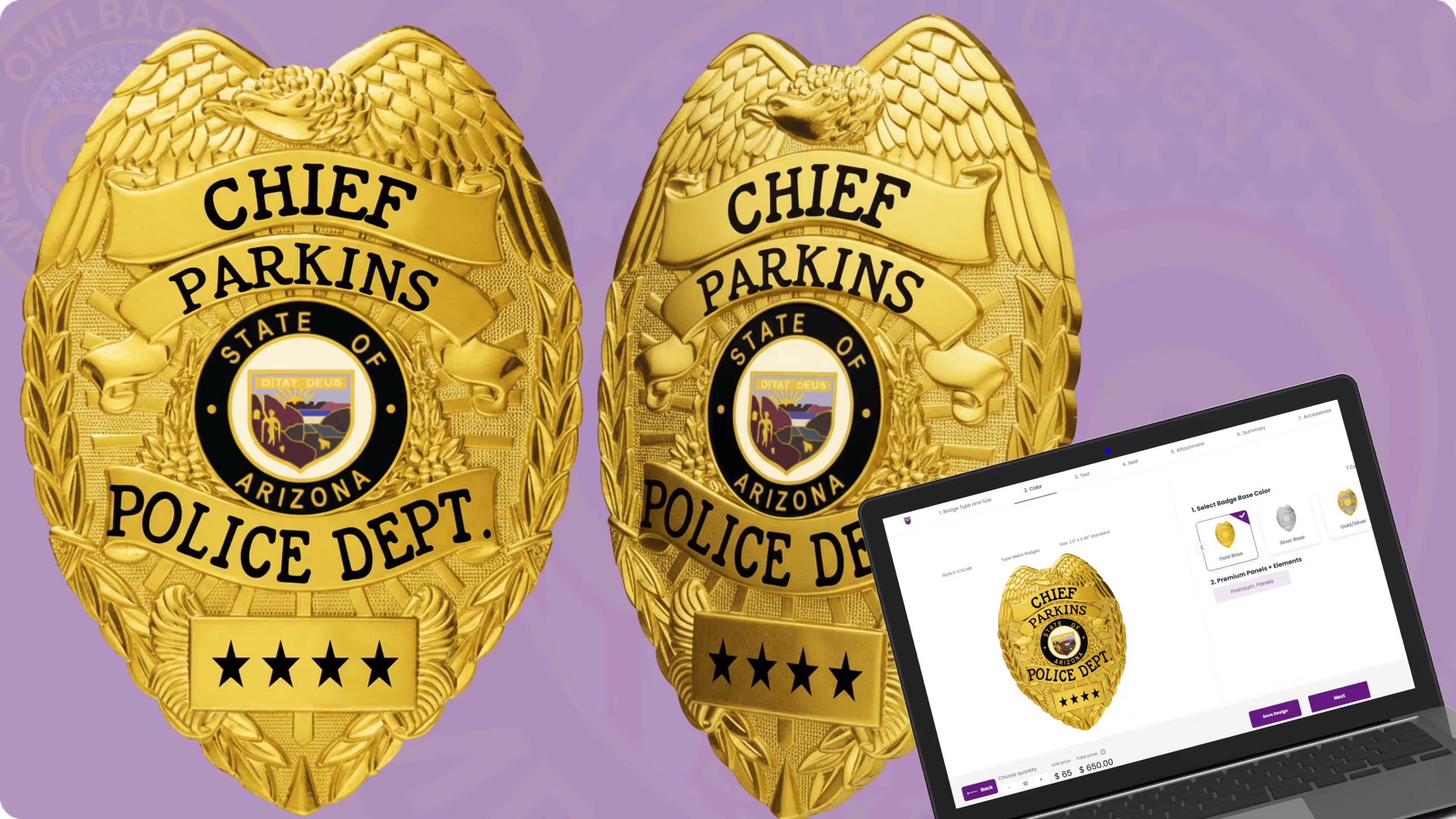
A custom badge is a professionally manufactured metal credential designed to specific organizational requirements. Custom badges feature unique combinations of shapes (shields, stars, ovals, eagles), metal finishes (gold, silver, bronze, two-tone), enamel colors, institutional seals, department names, rank designations, and badge numbers. Organizations including police departments, sheriff offices, fire departments, security companies, federal agencies, and private institutions use custom badges to identify personnel, establish authority, and maintain professional standards. Quality custom badges use die-struck brass construction with hard enamel and premium plating that lasts 20-30 years.
Overview of custom badge shapes, metal finishes, organization types, and the design process
What Is a Custom Badge?
A custom badge is a professionally manufactured metal credential designed to meet specific organizational requirements. Unlike generic or mass-produced identification, custom badges are created with unique combinations of shapes, text, seals, finishes, and design elements that identify the issuing organization and the individual wearer.
Custom badges serve multiple critical functions. They establish visual authority, enabling personnel to be immediately recognized as official representatives of their organization. They provide individual identification through badge numbers linked to personnel records. They communicate rank and position through finish variations and design elements. And they represent organizational identity through seals, department names, and institutional branding.
Metal badges emerged in American law enforcement during the mid-1800s. Early badges were often handmade by local silversmiths or jewelers, creating one-of-a-kind credentials. As police departments professionalized in the late 19th century, standardized custom badge production developed. Die-struck manufacturing techniques perfected in the early 1900s remain the standard today, producing detailed, durable badges that serve entire careers.
The term “custom” distinguishes these professional credentials from novelty items or generic security badges. A true custom badge is manufactured to specification using die-struck brass construction, hard enamel color work, and premium plating—the same methods and materials used for over a century. This quality ensures badges maintain their appearance and structural integrity for 20-30 years of daily wear.
Organizations invest in custom badges because credentials reflect institutional standards. A professionally designed badge communicates that the organization takes its mission seriously. Poor quality badges suggest poor quality operations. Quality custom badges represent a one-time investment that serves personnel throughout their careers. Explore badge design history and traditions that inform modern custom badge creation.
Custom Badge Shapes and Styles
Badge shape is the most immediately visible element of custom badge design. Different shapes carry distinct meanings, regional associations, and organizational traditions. Selecting the right shape establishes the foundation for effective badge design.
| Shape | Common Uses | Regional Association | Text Capacity |
|---|---|---|---|
| Shield | Police, Federal, Detective | East Coast, Midwest, NYC | High – multiple text panels |
| 7-Point Star | Police, Sheriff | California, West Coast | Medium – circular text rings |
| 5-Point Star | Marshal, Sheriff, Rangers | Texas, Southwest, Federal | Medium – center focus |
| 6-Point Star | Sheriff, Traditional | Midwest, Various | Medium – balanced design |
| Oval | Security, Campus, Private | National – non-police | High – vertical space |
| Eagle Top | Command Staff, Ceremonial | National – all regions | High – formal design |
Shield badges connect to historic police and detective traditions. The shield shape offers excellent text capacity with multiple panels for department name, rank, and badge numbers. Major departments including NYPD, Chicago PD, and most East Coast agencies use shield designs. Explore police officer badge designs featuring shield shapes.
Star badges carry Western and federal associations. The 7-point star became iconic through California law enforcement, while 5-point stars connect to U.S. Marshals and Texas Rangers traditions. 6-point stars often identify sheriff departments. Star shapes immediately communicate law enforcement authority. View sheriff badge designs using star shapes.
Specialty shapes serve specific organizational needs. Oval and circle badges often identify security personnel, distinguishing them from police. Eagle top designs communicate command rank or ceremonial importance. Sunburst patterns frequently appear on fire service badges. Selecting appropriate shapes helps communicate role and authority clearly.
Design Elements and Customization Options
Beyond shape, multiple design elements combine to create distinctive custom badge credentials. Understanding these options enables organizations to create badges that effectively communicate identity, authority, and professionalism.
Metal finish immediately communicates rank and authority level in most organizations. Gold typically identifies command staff and investigators. Silver designates patrol officers and sergeants. Two-tone (gold and silver) often indicates supervisory ranks like lieutenants. Bronze identifies auxiliary or security personnel. This color-coding system creates instant visual hierarchy that community members and fellow officers recognize.
Center seals anchor badge designs and establish organizational identity. City and county seals, department emblems, state flags, or custom logos appear in the badge center. Quality die work captures seal detail effectively. High-resolution source artwork produces the best results. Center seals may include enamel color work for additional detail.
Text panels display department names, jurisdiction, rank titles, and other identifying information. Text typically appears on raised panels with enamel color backgrounds. Common configurations include top arc text (department name), center or lower panels (rank), and bottom text (jurisdiction). Font selection, sizing, and placement affect readability and overall design balance.
Badge numbers provide individual identification linking each badge to personnel records. Numbers may appear on dedicated panels, integrated into overall design, or as separate attachable elements. Number placement affects badge appearance and ease of identification. Consider whether numbers should be prominently displayed or subtly incorporated.
Border designs add visual interest and traditional elements. Options include plain borders, rope borders, laurel wreaths, beaded edges, and decorative patterns. Border choice affects overall badge personality—rope borders feel traditional, plain borders appear modern, laurel suggests achievement. Border selection should complement other design elements.
Enamel colors add visual impact through colored panels and accents. Hard enamel withstands wear while maintaining vibrant color. Common choices include navy blue, black, red, and institutional colors. Effective designs typically use 2-4 colors maximum—excessive colors create visual confusion. Learn more about badge customization options.
Detailed anatomy showing customizable elements of a professional badge
Materials and Manufacturing
Quality custom badge production uses proven materials and manufacturing techniques developed over more than a century. Understanding these elements helps organizations evaluate badge quality and make informed decisions about their credentials.
- Material: High-grade brass alloy (most durable option)
- Construction: Die-struck under high pressure
- Enamel: Hard-fired (kiln-baked) for permanence
- Plating: Multiple base layers plus finish layer
- Protection: Clear coat to prevent tarnishing
Brass construction remains the gold standard for professional badges. High-grade brass alloys offer excellent durability, corrosion resistance, and the substantial weight that conveys quality. Brass accepts fine die detail and holds plating effectively. Alternative materials like zinc alloy cost less but sacrifice durability and appearance over time.
Die-struck manufacturing creates the detailed, dimensional appearance of quality badges. Steel dies are cut with the badge design, then brass blanks are struck under tons of pressure to transfer the design. This process creates crisp edges, sharp detail, and the raised/recessed areas that define badge appearance. Die-struck badges significantly outperform stamped or cast alternatives.
Hard enamel color work involves filling recessed areas with powdered glass, then kiln-firing at high temperatures to create permanent, glass-like color. Hard enamel resists chipping, fading, and wear for decades. Soft enamel offers dimensional texture but less durability. Most professional badges use hard enamel for critical color areas.
Premium plating creates the gold, silver, or specialty finishes that define badge appearance. Quality plating involves multiple layers: copper base for adhesion, nickel for durability, then finish plating (gold, rhodium/silver, or other). Final clear coating prevents tarnishing and extends finish life. Proper plating maintains appearance throughout badge service life.
Organizations That Use Custom Badges
Custom badges serve diverse organizations across law enforcement, fire service, security, and public safety sectors. Each organization type has specific badge requirements, traditions, and design considerations.
When designing badges for multiple rank levels, create a unified design family with consistent shapes, seals, and layouts. Vary only the finish (gold vs. silver) and rank panel text between versions. This approach simplifies ordering, ensures visual consistency, and clearly communicates organizational hierarchy while maintaining distinct identification for each position.
Police departments represent the largest category of custom badge users. From small-town agencies with 10 officers to major metropolitan departments with thousands, police badges establish authority and organizational identity. Design varies by region, with shield badges dominating the East Coast and star badges common in the West. Explore police officer badge options.
Sheriff offices typically use star-shaped badges reflecting their historic connection to Western law enforcement traditions. The 5-point and 6-point stars distinguish sheriffs from municipal police visually. Sheriff badges often include county seals and reflect the elected nature of the office. View sheriff badge designs.
Fire departments use distinctive badge styles including Maltese crosses, circular designs, and sunburst patterns. Fire badges often feature the scramble (firefighter tools crossed), department founding dates, and red enamel accents. Fire chief badges frequently use elaborate eagle-top designs. Browse fire department badge options.
Security companies require badges that project professionalism without implying police authority. Oval and distinctive non-police shapes help differentiate security from law enforcement. Bronze or silver finishes appropriately distinguish security officers. Security badges should clearly identify the company name and individual officer. See security officer badges.
Federal agencies use custom badges reflecting their specific missions and Department of Justice, Homeland Security, or Treasury affiliations. Federal badges often incorporate agency seals, eagle emblems, and distinctive designs that establish federal authority. Many federal designs follow specific agency traditions. Explore federal badge designs.
Campus safety departments range from fully sworn university police to security officer programs. Badge design should accurately reflect authority level—sworn departments may use police-style badges while security programs should use distinctive non-police designs. Learn about campus safety badge options.
The Custom Badge Design Process
Creating custom badges follows a structured process ensuring that final products meet organizational requirements. Understanding this workflow helps departments plan effectively and achieve optimal results.
✅ Prepare Before Ordering:
- ✓ High-resolution seal artwork (vector preferred)
- ✓ Complete rank title list
- ✓ Badge number range/list
- ✓ Finish preferences by rank
❌ Common Mistakes to Avoid:
- ✗ Low-resolution artwork (pixelated seals)
- ✗ Rushing approval (causes errors)
- ✗ Too many enamel colors (visual clutter)
- ✗ Undersized text (readability issues)
Step 1: Consultation begins the process. Provide your requirements including shape preferences, department/organization information, rank structure, badge number ranges, and any existing artwork. Reference images of current or desired badges help communicate your vision. This initial discussion establishes project scope and identifies any special requirements.
Step 2: Design development produces artwork based on consultation input. Designers create badge layouts incorporating your seal, text, and design preferences. Initial designs may present multiple options for consideration. This phase typically takes 1-3 business days depending on complexity.
Step 3: Proof approval ensures accuracy before production begins. Review proofs carefully—check all text spelling, verify seal accuracy, confirm finish assignments, and validate badge numbers. Most suppliers offer unlimited revisions until approval. Take time during this phase; corrections after production are expensive or impossible.
Step 4: Production transforms approved designs into physical badges. Manufacturing includes die creation, striking, polishing, plating, enameling, and finishing. Quality production typically requires 3-4 weeks. Rush production is sometimes available at additional cost. Supplier communication during this phase keeps you informed of progress.
Step 5: Delivery and inspection completes the process. Upon receipt, inspect badges for quality, accuracy, and completeness. Verify that finishes, text, and numbers match approved proofs. Report any issues immediately. Quality suppliers stand behind their work and address legitimate concerns promptly. Visit the badge design gallery to explore available options.
Frequently Asked Questions
❓ How long does custom badge production take?
Total timeline from initial consultation to delivery typically ranges from 4-8 weeks. Design and proof approval takes 1-2 weeks depending on revision cycles. Production requires 3-4 weeks for die creation, striking, plating, and finishing. Shipping adds 3-5 business days. Rush production may be available for urgent needs at additional cost, potentially reducing production time to 2-3 weeks.
❓ What is the minimum order quantity for custom badges?
Minimum orders typically range from 10-25 badges depending on the manufacturer and design complexity. Custom die creation involves significant setup costs that are distributed across the order quantity. Smaller agencies can often work with existing die designs modified with their specific text and seals, potentially allowing smaller quantities. Economies of scale make larger orders more cost-effective per badge.
❓ Can I use my existing department seal on custom badges?
Yes, custom badges can incorporate your existing city, county, or department seal. Provide the highest resolution artwork available—vector formats (AI, EPS, SVG) work best. If only a physical seal or low-resolution image exists, designers can recreate it, though this may add time and cost. Clear, detailed source artwork produces the best badge results.
❓ What’s the difference between hard and soft enamel?
Hard enamel is kiln-fired at high temperatures, creating a smooth, glass-like surface level with the metal. It’s extremely durable and resists scratching, chipping, and fading for decades. Soft enamel is air-dried, leaving color recessed below metal edges for a dimensional look. Soft enamel is less expensive but less durable. Most professional law enforcement badges use hard enamel for longevity.
❓ How long do quality custom badges last?
Quality custom badges constructed from die-struck brass with proper plating and hard enamel typically last 20-30 years with normal daily wear. Many officers use the same badge throughout their entire career. Proper care—avoiding harsh chemicals, storing in protective cases when not worn, and periodic gentle cleaning—extends badge life. Quality badges are career-long investments, not consumable supplies.
- Shape matters: Shields, stars, and ovals each carry distinct meanings and regional traditions
- Finish indicates rank: Gold for command, silver for patrol, bronze for security/auxiliary
- Quality construction: Die-struck brass with hard enamel lasts 20-30 years
- Customization options: Shape, seal, text, finishes, enamel colors, badge numbers all configurable
- Timeline: 4-8 weeks from consultation through delivery
- Proof carefully: Verify all details before approving production
- Provide quality artwork: High-resolution vector files produce best seal reproduction
- Plan quantities: Minimum orders typically 10-25 badges; larger orders more cost-effective
🔗 Share This Guide
Found this helpful? Share with colleagues planning badge programs.
Conclusion
Custom badges represent more than identification—they embody organizational identity, establish authority, and serve as career-long symbols of professional service. Understanding the elements of effective badge design—shape selection, finish hierarchy, quality materials, and proper customization—enables organizations to create credentials that serve their personnel and communities for decades.
Whether equipping a police department, sheriff office, fire department, security company, or other public safety organization, custom badge design follows established principles refined over more than a century. Quality die-struck brass construction, premium plating, and hard enamel create badges worthy of the professionals who carry them. With proper planning and attention to detail, custom badges become lasting symbols of service excellence.
Related Resources
Written by
Michael Torres
Badge Industry Expert
Published: February 15, 2024
Last Updated: December 2025
Tags: