


Campus Security
Campus Safety Badges: Complete Guide to University Security Credentials
Understanding badge types, authority levels, and design options for campus police and security personnel at educational institutions.
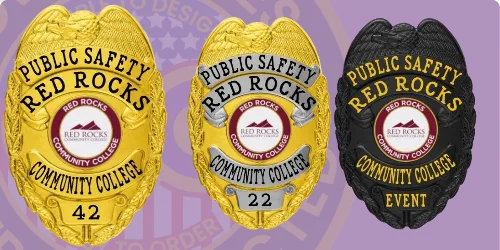
Campus safety badges are official credentials carried by security personnel at universities, colleges, and K-12 schools. These badges identify sworn campus police officers with full arrest authority, non-sworn security officers, parking enforcement, and specialized safety personnel. Over 900 colleges operate sworn police departments, while thousands more employ security officers. Campus safety badges feature institutional seals, department names, rank designations, and officer identification numbers. Badge design distinguishes authority levels—gold typically indicates sworn police status while silver or bronze identifies security personnel.
Overview of campus safety badge types, authority levels, personnel roles, and industry statistics
Campus Safety and Security Overview
Campus safety badges identify the personnel responsible for protecting students, faculty, staff, and visitors at educational institutions. From major research universities with sworn police departments to community colleges with security officers, campus safety programs vary significantly in structure, authority, and badge design.
The Clery Act of 1990 established federal requirements for campus security, including crime reporting, emergency notifications, and safety policies. This legislation professionalized campus safety operations and standardized many practices across institutions. Today, campus safety departments issue credentials that clearly identify personnel and their authority levels.
Yale University established one of America’s first campus police forces in 1894. By the 1960s, campus unrest drove many universities to create or expand police departments. Today, over 900 colleges and universities operate sworn police departments, while thousands more employ professional security services. Campus safety badges evolved from simple identification to sophisticated credentials reflecting varying authority levels.
Campus safety encompasses multiple functions beyond traditional law enforcement. Personnel handle everything from emergency response and crime prevention to parking enforcement, building access, and late-night escort services. Each function may involve distinct badge designs and authority levels appropriate to the role.
The badge serves as immediate visual identification of campus safety personnel. Students and visitors recognize these credentials as symbols of institutional authority. Clear badge design distinguishes sworn police from security officers, preventing confusion about authority levels. Explore campus safety badge designs for educational institutions.
Campus Safety Badge Design Elements
Campus safety badges incorporate design elements that identify the institution, department, position, and authority level of the wearer. Thoughtful badge design creates immediate recognition while distinguishing between different personnel categories.
The institutional seal or logo typically appears prominently on campus safety badges. University seals, college crests, or school district logos connect the badge to specific institutions. This branding element establishes that the wearer represents the educational organization rather than municipal or state law enforcement.
Badge finish immediately communicates authority level on campus. Gold badges typically identify sworn police officers with full arrest powers. Silver badges often designate public safety officers with limited authority. Bronze or other finishes may identify security personnel, parking enforcement, or civilian staff. This color-coding system helps students and visitors quickly assess who they’re interacting with.
Department name text clearly identifies the campus safety organization. Common designations include “University Police,” “Campus Police,” “Public Safety,” “Campus Security,” or “Department of Safety and Security.” These titles reflect both institutional preferences and legal authority levels granted by state law.
Badge shapes vary across campus safety organizations. Shield shapes connect to law enforcement traditions and often indicate sworn police departments. Star shapes may indicate sheriff-affiliated campus law enforcement. Oval or circular badges often identify security or public safety personnel. The shape choice communicates organizational identity and authority level.
Rank and position designations appear on campus safety badges to identify personnel hierarchy. Chief, Lieutenant, Sergeant, Officer, and specialized titles like Detective or Investigator follow similar structures to municipal police. Security personnel may carry titles like Security Director, Supervisor, or Officer. Learn more about police rank structures that apply to campus law enforcement.
Campus Police vs. Security Officers
Understanding the difference between campus police and security officers is essential when designing or selecting campus safety badges. These personnel categories have fundamentally different authority, training requirements, and legal powers that should be reflected in badge design.
| Aspect | Campus Police | Security Officers |
|---|---|---|
| Legal Status | Sworn peace officers | Private security (non-sworn) |
| Arrest Authority | Full arrest powers | Citizen’s arrest only |
| Training | Police academy certification | State security guard license |
| Armed Status | Typically armed | Usually unarmed (varies) |
| Jurisdiction | Campus + adjacent areas | Campus property only |
| Badge Finish | Gold (command), Silver (patrol) | Bronze, nickel, or silver |
Campus police officers are sworn law enforcement with full arrest authority granted by state law. They complete police academy training identical to municipal officers. Campus police can investigate crimes, execute search warrants, carry firearms, and exercise all powers of state-certified peace officers. Their badges reflect this sworn status, typically using gold finishes for command staff and silver for patrol officers.
Security officers are non-sworn personnel with authority limited to private property. They can observe, report, and detain individuals only under citizen’s arrest provisions. Security officers typically complete state-mandated guard licensing rather than police academy training. Badge designs should clearly distinguish security from police to prevent confusion about authority.
Public safety officers represent a middle category at some institutions. These personnel may have enhanced authority beyond basic security guards but less than sworn police. Some states authorize “special police officer badge” or “peace officer” status for campus personnel who complete modified training. Badge design should accurately reflect their specific authority level. Compare with security officer badge options.
Detailed anatomy of a campus safety badge showing key design elements and their significance
Types of Campus Safety Personnel
Campus safety departments employ diverse personnel, each requiring appropriate campus safety badges reflecting their specific roles and authority. Understanding these categories helps institutions design badge programs that clearly communicate personnel functions.
Use consistent badge design elements across your campus safety program while varying finishes and titles to distinguish roles. A unified design family with gold/silver/bronze finish variations clearly communicates hierarchy while maintaining institutional branding. This approach simplifies ordering while preventing confusion.
Sworn police officers hold the highest authority level on campus. They complete state-certified police academy training and have full arrest powers. Titles include Chief, Deputy Chief, Lieutenant, Sergeant, Detective, and Officer. Gold badges typically identify command staff, while silver designates patrol officers. Campus police badges often feature shield shapes connecting to law enforcement tradition.
Public safety officers may hold intermediate authority between sworn police and security guards. Some states authorize “special police officer badge officer” or “campus peace officer” status with limited arrest powers. These personnel typically complete modified training programs. Badge design should clearly distinguish them from fully sworn police while indicating enhanced authority over basic security.
Security officers provide property protection without sworn law enforcement powers. They patrol buildings, monitor access, respond to alarms, and observe/report incidents. Security officer badges should clearly identify them as security rather than police. Bronze finishes, oval shapes, or distinct designs prevent confusion about authority levels.
Parking enforcement personnel manage campus parking through citation issuance, permit verification, and traffic direction. Their badges identify parking authority without implying broader law enforcement powers. Distinctive designs using different colors or shapes prevent confusion with police or security. Learn about parking enforcement badge options.
Dispatch and communications staff operate emergency communications centers. While typically not uniformed or badges for public interaction, some departments issue credentials for identification purposes. Administrative badges may use different designs from field personnel.
Badge Design by Institution Type
Campus safety badges vary based on the type of educational institution. Public universities, private colleges, community colleges, and K-12 schools each present unique considerations for badge design, authority levels, and branding requirements.
🎓 Universities & Colleges:
- ✓ Often operate sworn police departments
- ✓ Feature university seal prominently
- ✓ Multiple personnel categories
- ✓ Gold/silver finish hierarchy
🏫 K-12 Schools:
- ✓ School Resource Officers (SROs)
- ✓ District-wide security teams
- ✓ School district seal/logo
- ✓ Age-appropriate design approach
Public universities frequently operate fully sworn police departments with state-certified officers. These agencies function similarly to municipal police with equivalent training and authority. Public university police badges typically follow traditional law enforcement designs with gold command staff and silver patrol officer finishes.
Private colleges vary significantly in their security approach. Large private universities may operate sworn police departments, while smaller colleges often employ security officers. Badge design should accurately reflect the actual authority level. Private institutions should avoid police-style badges for non-sworn security personnel.
Community colleges present unique challenges with multiple campuses, evening programs, and diverse student populations. Some operate sworn police departments while others contract security services. Badge programs should maintain consistency across campuses while clearly identifying personnel authority.
K-12 school districts may employ School Resource Officers (SROs) who are typically sworn police from local departments. School security officers, safety monitors, and hall monitors require appropriate credentials for their roles. Badge design should be professional while appropriate for educational environments. Explore police officer badge designs for SRO programs.
Materials and Customization Options
Quality campus safety badges require appropriate materials and customization to serve their identification purpose effectively. Understanding material options and design choices helps institutions create professional credentials that last throughout officer careers.
- Materials: Brass (most common), nickel silver, zinc alloy
- Finishes: Gold, silver, bronze, nickel, antique
- Construction: Die-struck with hard enamel details
- Lifespan: 20-30 years with proper care
Brass construction provides the ideal foundation for campus safety badges. High-grade brass offers excellent durability, accepts detailed die work, and holds plating effectively. The substantial weight conveys quality appropriate for professional credentials. Brass badges withstand decades of daily wear when properly maintained.
Plating options communicate rank and authority. Gold plating (typically for command staff and sworn officers) uses multiple layer processes for durability. Silver and nickel finishes provide professional appearance for patrol officers. Bronze finishes appropriately identify security personnel. Quality plating maintains appearance throughout badge life.
Enamel colors add institutional branding and visual interest. Hard-fired enamel withstands wear while maintaining vibrant color. Common campus badge colors include navy blue, black, institutional colors (matching school colors), and traditional red/white/blue combinations. Enamel work typically appears on text panels and seal areas.
Customization elements include institutional seals, department names, rank panels, and badge numbers. High-quality die work captures seal detail effectively. Text should be sized for readability while fitting the badge design. Badge numbers link credentials to personnel records for accountability. Visit the custom badge design gallery for additional options.
Security officer badges should be clearly distinguishable from sworn police credentials. Using police-style designs, gold finishes, or “police” terminology for non-sworn personnel may violate state laws regarding impersonation. Always verify that badge designs accurately reflect the legal authority of personnel who will carry them.
Frequently Asked Questions
❓ Do campus police have the same authority as regular police?
Sworn campus police officers at accredited institutions typically have the same arrest powers and authority as municipal police officers. They complete identical state-certified police academy training. Their jurisdiction usually includes campus property plus adjacent public areas. Some states grant full statewide police authority to campus officers. However, non-sworn campus security officers have no special police officer badge powers beyond any private citizen.
❓ What badge finish indicates a sworn campus police officer?
Gold finishes typically identify sworn police officers, especially command staff (Chief, Deputy Chief, Captain, Lieutenant). Silver finishes commonly designate patrol-level sworn officers. Bronze, copper, or nickel finishes usually identify non-sworn security personnel. However, practices vary by institution—always check specific department policies. Badge shape (shield vs. oval) also often indicates authority level.
❓ How many colleges have their own police departments?
Over 900 colleges and universities in the United States operate sworn police departments. The Bureau of Justice Statistics reports approximately 30,000 full-time campus law enforcement employees nationwide. Most large public universities and many private institutions maintain sworn police forces. Smaller colleges more commonly employ security officers or contract with local police for law enforcement services.
❓ Can campus security officers carry weapons?
Policies vary significantly by institution and state law. Sworn campus police officers are typically armed like any police officer. Non-sworn security officers may be unarmed, carry pepper spray or batons, or in some cases carry firearms with proper licensing. Armed security requires additional state licensing and training. Individual campus policies determine what equipment security personnel may carry.
❓ What is the Clery Act and how does it affect campus safety?
The Clery Act (1990) requires colleges receiving federal funding to report campus crime statistics, issue timely warnings about threats, maintain public crime logs, and publish annual security reports. It professionalizes campus safety operations and creates accountability standards. The Act is named for Jeanne Clery, a student murdered at Lehigh University in 1986. Compliance requires organized campus safety departments with proper identification systems including professional badges.
- Authority levels: Gold badges typically indicate sworn police; silver/bronze identify security personnel
- 900+ campus PDs: Over 900 colleges operate sworn police departments with full arrest authority
- Clear distinctions: Badge design must clearly distinguish police from security to prevent confusion
- Institutional branding: University seals, school colors, and department names create identity
- Multiple personnel types: Police, security, parking, dispatch each require appropriate credentials
- Quality materials: Brass construction with proper plating provides 20-30 year badge lifespan
- Legal compliance: Security badges should not resemble police credentials to avoid impersonation issues
- Clery Act: Federal law requiring professional campus safety operations and accountability
🔗 Share This Guide
Found this helpful? Share with campus safety professionals and educational administrators.
Conclusion
Campus safety badges serve as essential identification for the personnel protecting educational communities. From sworn campus police with full law enforcement authority to security officers providing property protection, appropriate badge design clearly communicates each person’s role and powers. Understanding the distinctions between personnel categories helps institutions create credential programs that prevent confusion while projecting professionalism.
Whether equipping a university police department, community college security team, or K-12 school safety program, badge design should accurately reflect authority levels, incorporate institutional branding, and meet quality standards for decades of service. Gold finishes for sworn police, distinctive designs for security officers, and clear institutional identification create effective campus safety badge programs that serve students, faculty, and the broader campus community.
Related Articles
Campus Safety Badge Designs
Browse badge options for universities and schools
SecuritySecurity Officer Badges
Professional security badge options
PolicePolice Officer Badge Designs
Sworn officer badge options for campus PD
Written by
Sarah Mitchell
Campus Security Specialist
Published: June 20, 2024
Last Updated: December 2025
Tags:
Campus security teams can browse our full range of eagle top armed security officer badges for their armed personnel.
Campus security teams can browse our full range of eagle top armed security officer badges for their armed personnel.