
Hoot Hoot! Call For 1st Order Discount 626-412-1200

Author: Owl Badges Team

Infographic showing 6 common police badge shapes: shield, 5-point star, 6-point star sheriff, circular, eagle-top, and 7-point star, with descriptions and color legend

Educational infographic displaying six types of law enforcement badges – shield badge used by police departments, 5-point star for federal authority, 6-point star for sheriff’s offices, circular badge for municipal police, eagle-top badge for federal agencies, and 7-point star for state patrol, including badge color legend showing gold for supervisory ranks and silver for patrol officers

Infographic showing 5 types of u. S. Fire departments: career (paid) departments with full-time firefighters serving major cities (8% of departments), volunteer departments with unpaid members protecting rural areas (65% of departments), combination departments mixing career and volunteer staff in suburban areas (18% of departments), paid-on-call departments with part-time firefighters earning $10-25/hour (5% of departments), and special departments including airport arff, industrial brigades, federal fire, and wildland agencies.

Compare 5 types of fire departments in the U.S. at a glance. This infographic breaks down career, volunteer, combination, paid-on-call, and special fire departments by staffing model, location served, and percentage of total departments. Essential guide for understanding how America’s 29,000+ fire departments are organized.

Patch material comparison infographic showing 9 custom patch types: embroidered, pvc/rubber, woven, chenille, leather, printed/sublimated, bullion/metallic, reflective, and glow-in-dark. Each type displays best uses, durability rating, detail level, cost range, and special features for professional uniform and custom patch applications.

Compare 9 patch material types at a glance. This infographic breaks down embroidered, PVC, woven, chenille, leather, printed, bullion, reflective, and glow-in-dark patches by durability, detail level, cost, and best applications. Essential reference for choosing the right custom patch material for uniforms, tactical gear, or promotional use.

Quick reference chart showing exact patch placement measurements for police uniforms. Shoulder patch: 1 inch below seam, centered, 0. 5 inch minimum seam clearance, 4-5 inch standard size, parallel to seam. Name plate: 0. 25 inch above pocket edge, centered on right breast pocket, 1x3 inch size. Rocker tab: 0. 5 inch below shoulder patch, centered, 4x1 inch arc size, 0. 25 inch between multiple rockers. Service stripes: 4 inches above cuff, 45-degree angle, left sleeve, 0. 75x3 inch stripes. Back panel: 4-6 inches below collar, centered, 2 inch minimum edge clearance, 4x10-12 inch size. Universal rules: measure twice, use tailor's chalk, pin before sewing, check department regulations, maintain symmetry.

Complete patch placement measurement guide for law enforcement uniforms. Six color-coded reference cards showing exact measurements for shoulder patches (1 inch below seam), name plates (0.25 inch above pocket), rocker tabs (0.5 inch spacing), service stripes (4 inches above cuff at 45-degree angle), and back panels (4-6 inches below collar). Includes universal placement rules for professional results.

Infographic showing six types of police patches by agency: municipal police (navy blue shield shape with city seal), sheriff (green star shape with county name), state police (gold state outline shape), federal (circular with eagle emblem in red, white, and blue), tactical/swat (subdued black square with velcro backing), and campus police (purple pentagon with school colors and institution name).

Police patches vary significantly by agency type. Municipal departments typically use navy blue shields, sheriff’s offices feature green stars, state police display state outlines in gold, federal agencies use circular seals with eagles, tactical units prefer subdued black velcro patches, and campus police incorporate school colors and mascots.

Bar chart showing custom police patch bulk pricing discounts: 10-24 pieces at $11. 50 each (base price), 25-49 pieces at $9. 20 (20% off), 50-99 pieces at $7. 48 (35% off), 100-249 pieces at $5. 75 (50% off, most popular), 250-499 pieces at $4. 03 (65% off), and 500+ pieces at $2. 30 (80% off). Example pricing for 3. 5 inch embroidered patch with 75% coverage.

Save up to 80% on custom police patches with bulk ordering. Our volume discounts start at just 25 pieces, with the most popular tier at 100-249 patches offering 50% savings. See exact pricing for your department’s order size.

Infographic comparing four patch backing types: sew-on (permanent, best for dress uniforms), iron-on (semi-permanent, best for work uniforms), velcro (removable, best for tactical vests), and adhesive (temporary, best for events). Includes decision guide showing recommended backing for police uniforms, tactical vests, fire department turnout gear, and security guard shirts.

Compare sew-on, iron-on, velcro, and adhesive patch backing types. Our visual decision guide helps you choose the right backing for police uniforms, tactical vests, fire department gear, and security applications.

How to Become a Bodyguard: Complete Executive Protection Career Guide [2026] Updated January 2026 | 25 min read Whether you dream of protecting celebrities, corporate executives, or high-net-worth families, becoming a bodyguard offers a rewarding career path with salaries ranging from $50,000 to over $200,000 annually. This comprehensive guide coversRead More
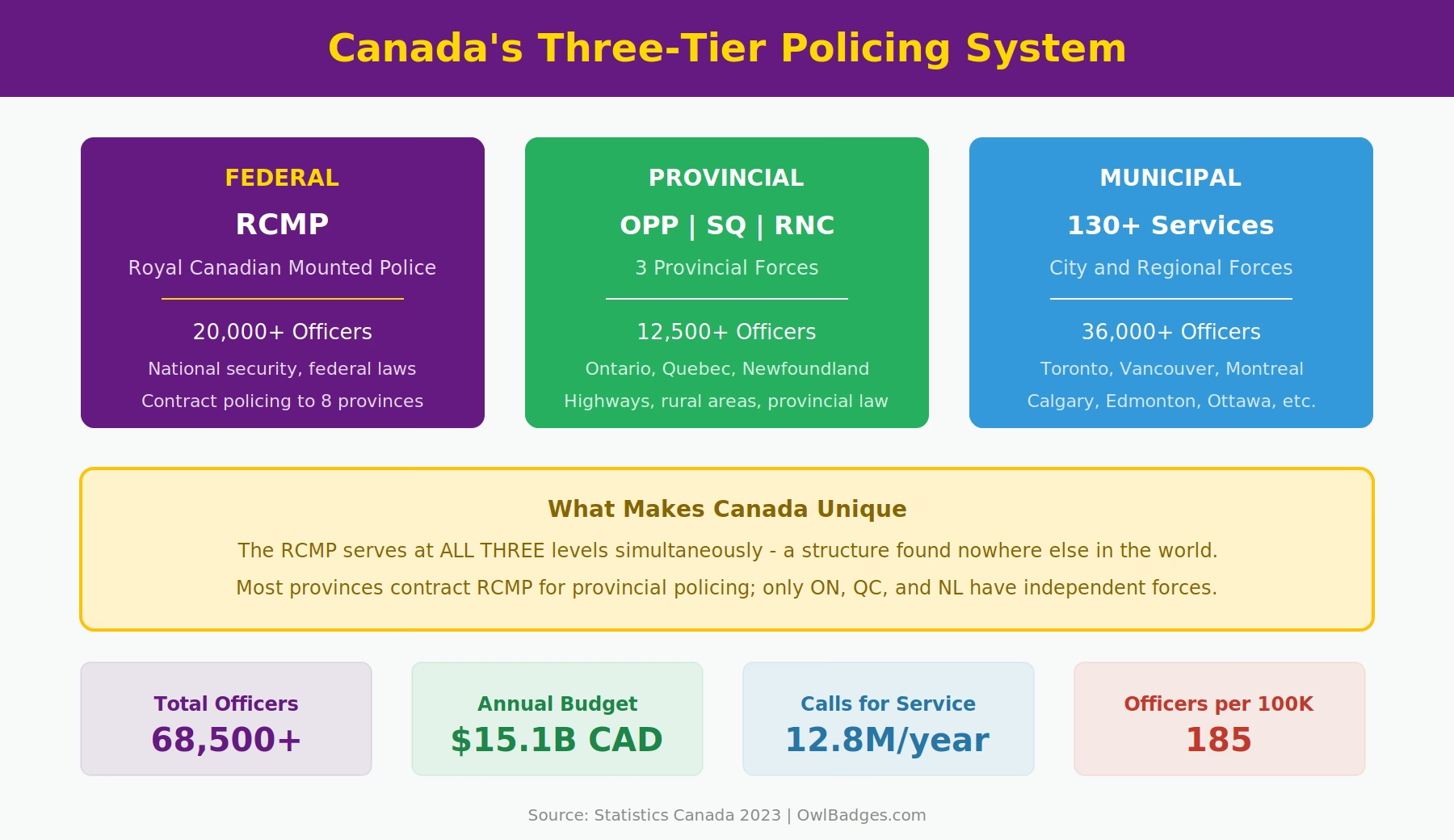
Infographic showing canada's three-tier policing system: federal (rcmp with 20,000+ officers), provincial (opp, sq, rnc with 12,500+ officers), and municipal (130+ services with 36,000+ officers). Statistics show 68,500 total officers, $15. 1b annual budget, 12. 8m calls per year, and 185 officers per 100k population.

Canada operates a unique three-tier policing system found nowhere else in the world. The RCMP serves at federal, provincial, and municipal levels simultaneously, while Ontario, Quebec, and Newfoundland maintain independent provincial forces. With 68,500 officers and a $15.1 billion annual budget, Canadian policing combines standardized training with regional flexibility.
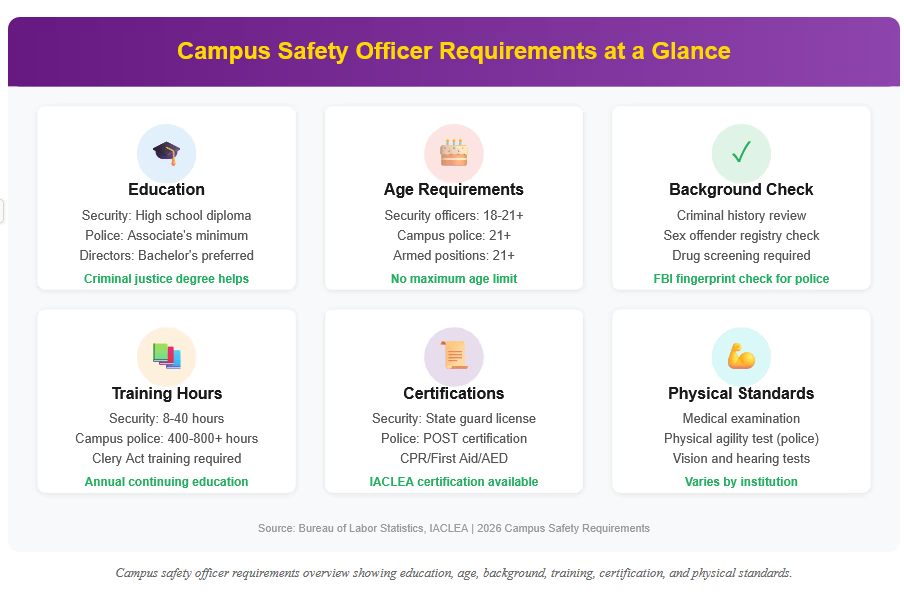
Campus safety officer requirements infographic showing education, age, background check, training, certification, and physical standards

Infographic displaying the six core requirements for campus safety careers: education levels, age minimums, background checks, training hours, certifications, and physical standards for both security officers and campus police.
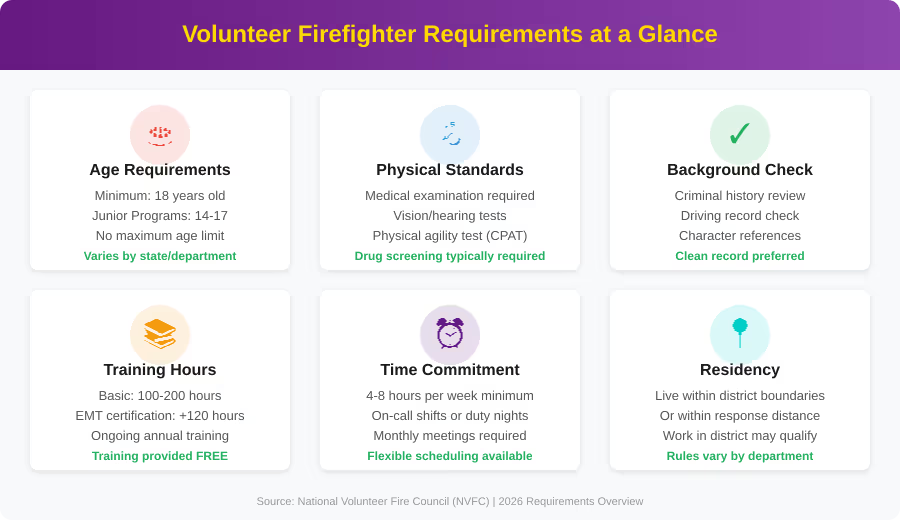
Infographic showing six volunteer firefighter requirements: age (18+, junior 14-17), physical standards (medical exam, cpat), background check (criminal and driving record), training hours (100-200 hours free), time commitment (4-8 hours weekly), and residency (within district boundaries). Source: national volunteer fire council 2026.

Wondering what it takes to become a volunteer firefighter? This guide breaks down the six essential requirements: age limits, physical standards, background checks, training hours, time commitment, and residency rules. Most volunteer fire departments require applicants to be 18+ years old, pass a medical exam and background check, and complete 100-200 hours of free training while committing just 4-8 hours per week.
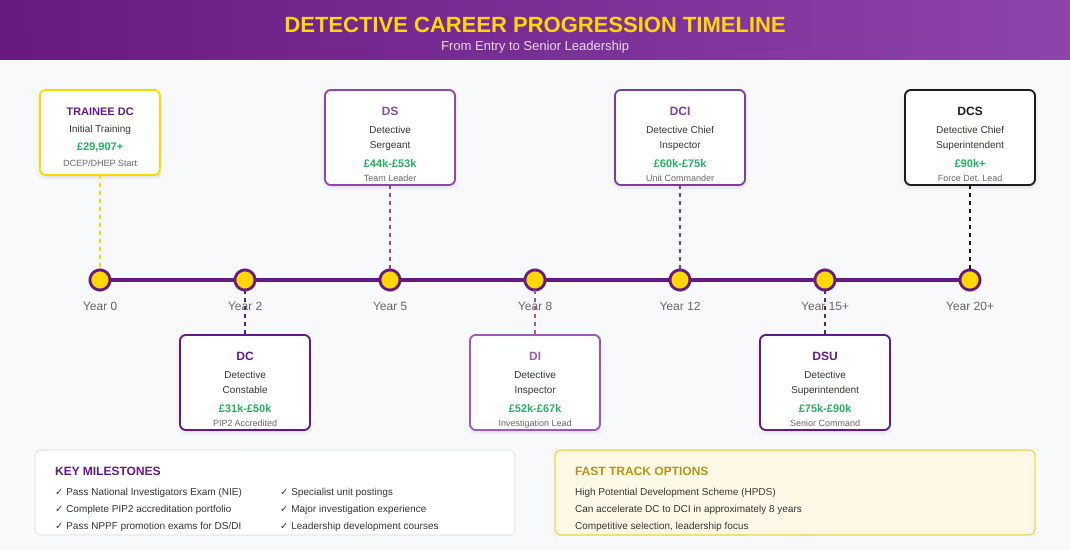
Uk detective career progression timeline infographic showing the path from trainee dc to detective chief superintendent over 20+ years, with salary ranges at each rank: trainee dc (£29,907+), dc (£31k-£50k), ds (£44k-£53k), di (£52k-£67k), dci (£60k-£75k), dsu (£75k-£90k), and dcs (£90k+). Includes key milestones like passing the national investigators exam and pip2 accreditation.

Visual timeline of UK detective career progression from entry-level Detective Constable to senior leadership, showing typical years of service and salary ranges at each rank from DC through DCS.