

Hoot Hoot! Call For 1st Order Discount 626-412-1200

Author: Owl Badges Team

Badge-Shaped Air Fresheners: The Perfect Gift for Law Enforcement Professionals Published: January 2025 | Updated: January 2025 | Author: Owl Badges Team | Read Time: 9 minutes 📌 Quick Answer Badge-shaped air fresheners combine professional pride with practical functionality. Available in classic star designs including 5-point stars, 6-point stars, andRead More

Law Enforcement Badge Guide: From Police to Private Security Published: January 2025 | Updated: January 2025 | Author: Owl Badges Team | Read Time: 12 minutes 📌 Quick Answer Purchasing custom badges requires understanding your role requirements, choosing appropriate materials and designs, and working with a manufacturer that specializes inRead More

Contemporary six-point star incorporating anti-counterfeiting security features, precision engraving, and high-quality plating for durability.

📚 ENCYCLOPEDIA ENTRY Home > Badge & Patch Encyclopedia > Sheriff Badges Sheriff Badges: County Law Enforcement Tradition and Symbolism Encyclopedia Entry | Last Updated: January 20, 2026 | 14 min read | Category: Law Enforcement A sheriff badge is the official insignia worn by sheriffs and deputy sheriffs representingRead More
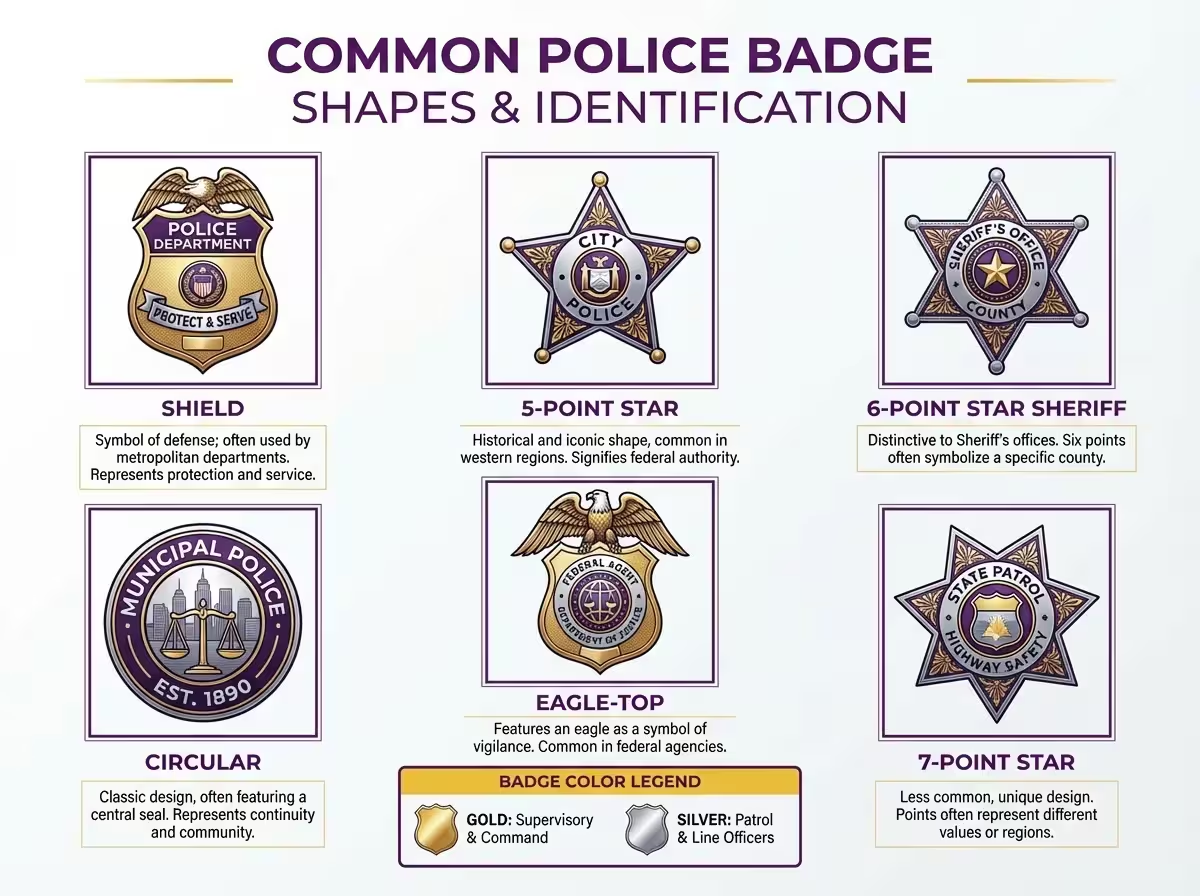
Infographic showing 6 common police badge shapes: shield, 5-point star, 6-point star sheriff, circular, eagle-top, and 7-point star, with descriptions and color legend

Educational infographic displaying six types of law enforcement badges – shield badge used by police departments, 5-point star for federal authority, 6-point star for sheriff’s offices, circular badge for municipal police, eagle-top badge for federal agencies, and 7-point star for state patrol, including badge color legend showing gold for supervisory ranks and silver for patrol officers
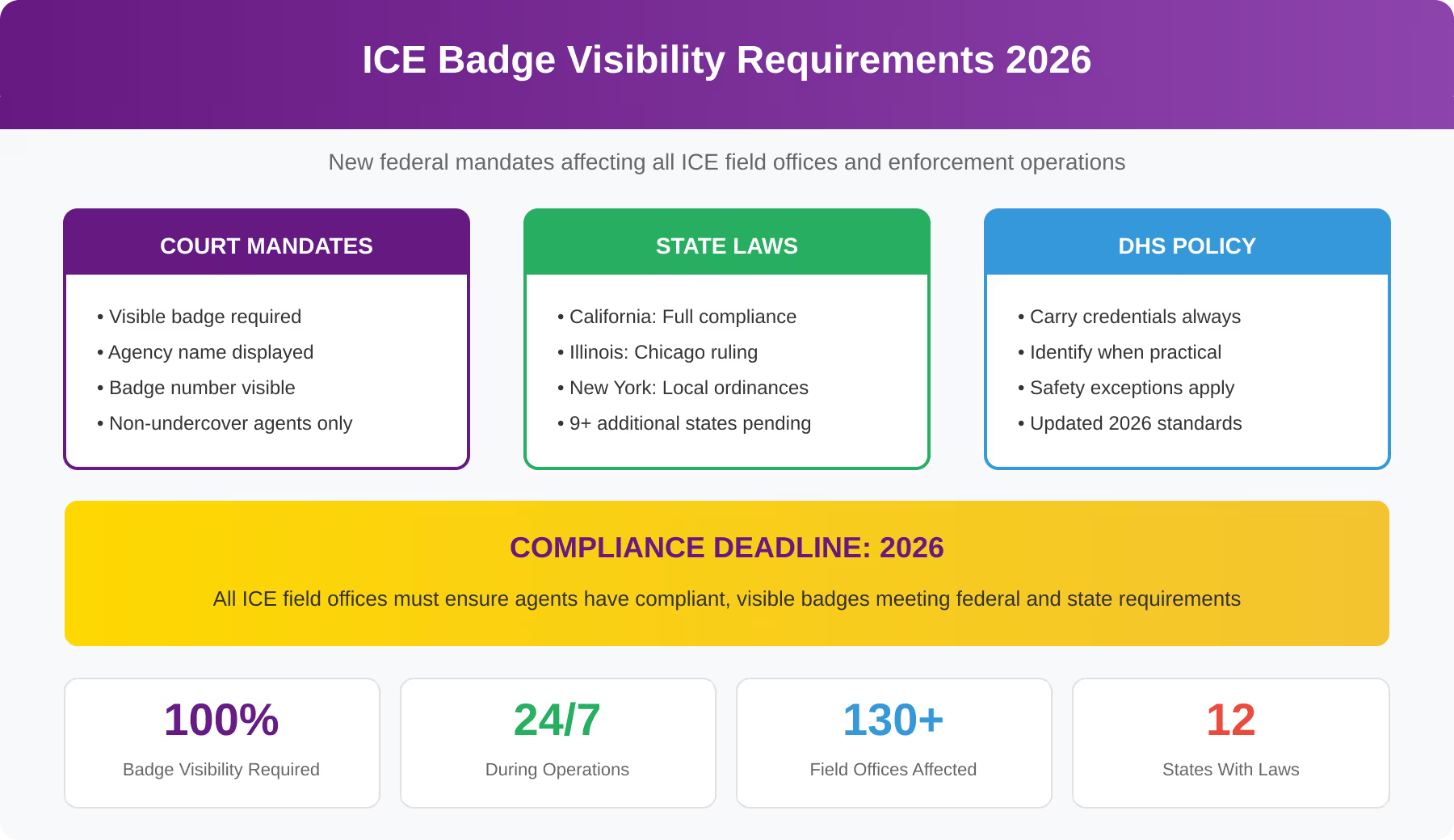
Ice badge visibility requirements 2026 infographic showing court mandates, state laws, and dhs policy requirements for federal agent identification with key statistics including 130+ field offices affected and 12 states with visibility laws

Infographic summarizing the new ICE badge visibility mandate for 2026, including court-ordered requirements for visible badges and agency identification, state laws requiring name or badge number display, and DHS policy updates affecting over 20,000 federal agents across 130+ field offices nationwide.
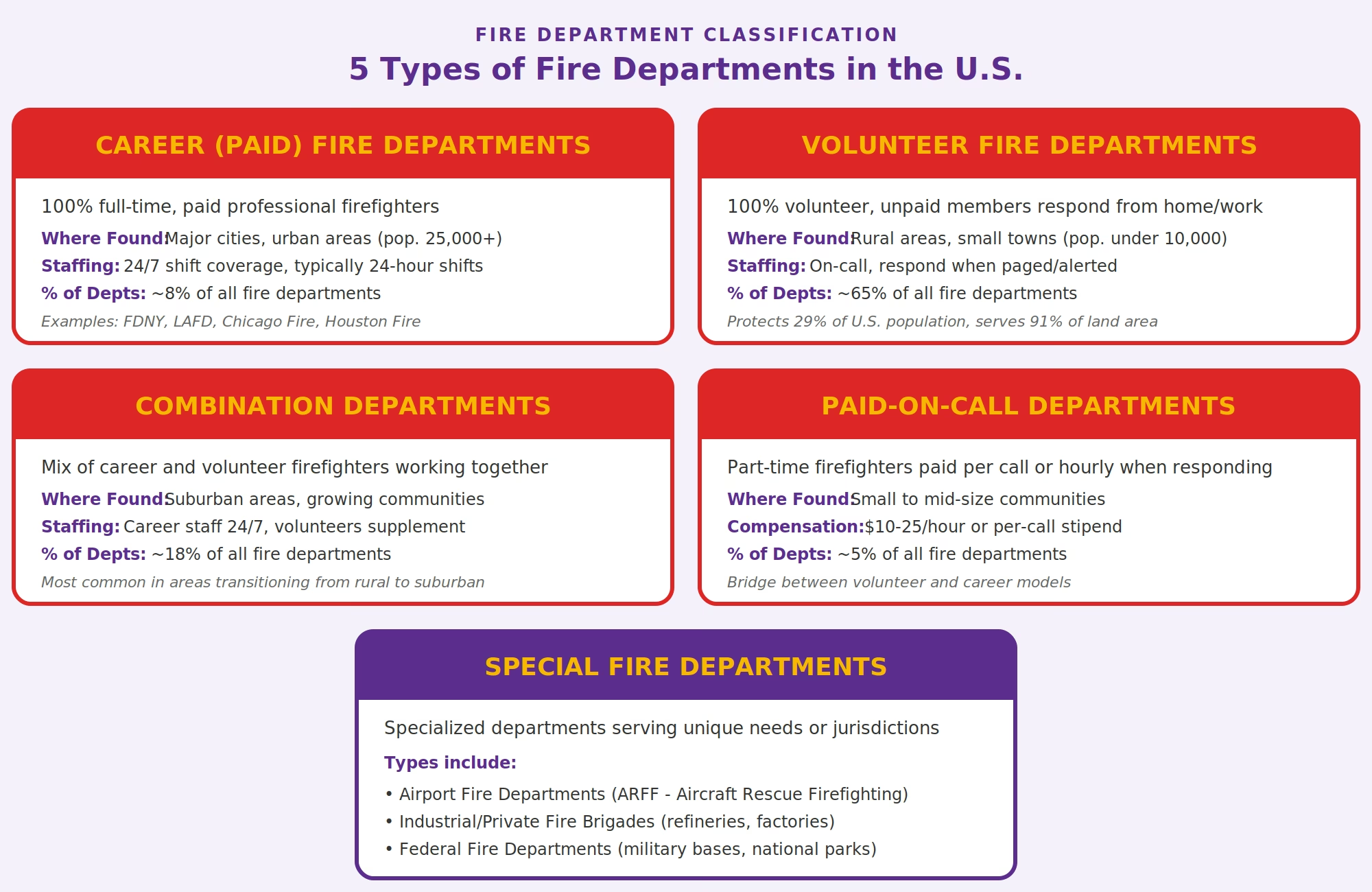
Infographic showing 5 types of u. S. Fire departments: career (paid) departments with full-time firefighters serving major cities (8% of departments), volunteer departments with unpaid members protecting rural areas (65% of departments), combination departments mixing career and volunteer staff in suburban areas (18% of departments), paid-on-call departments with part-time firefighters earning $10-25/hour (5% of departments), and special departments including airport arff, industrial brigades, federal fire, and wildland agencies.

Compare 5 types of fire departments in the U.S. at a glance. This infographic breaks down career, volunteer, combination, paid-on-call, and special fire departments by staffing model, location served, and percentage of total departments. Essential guide for understanding how America’s 29,000+ fire departments are organized.
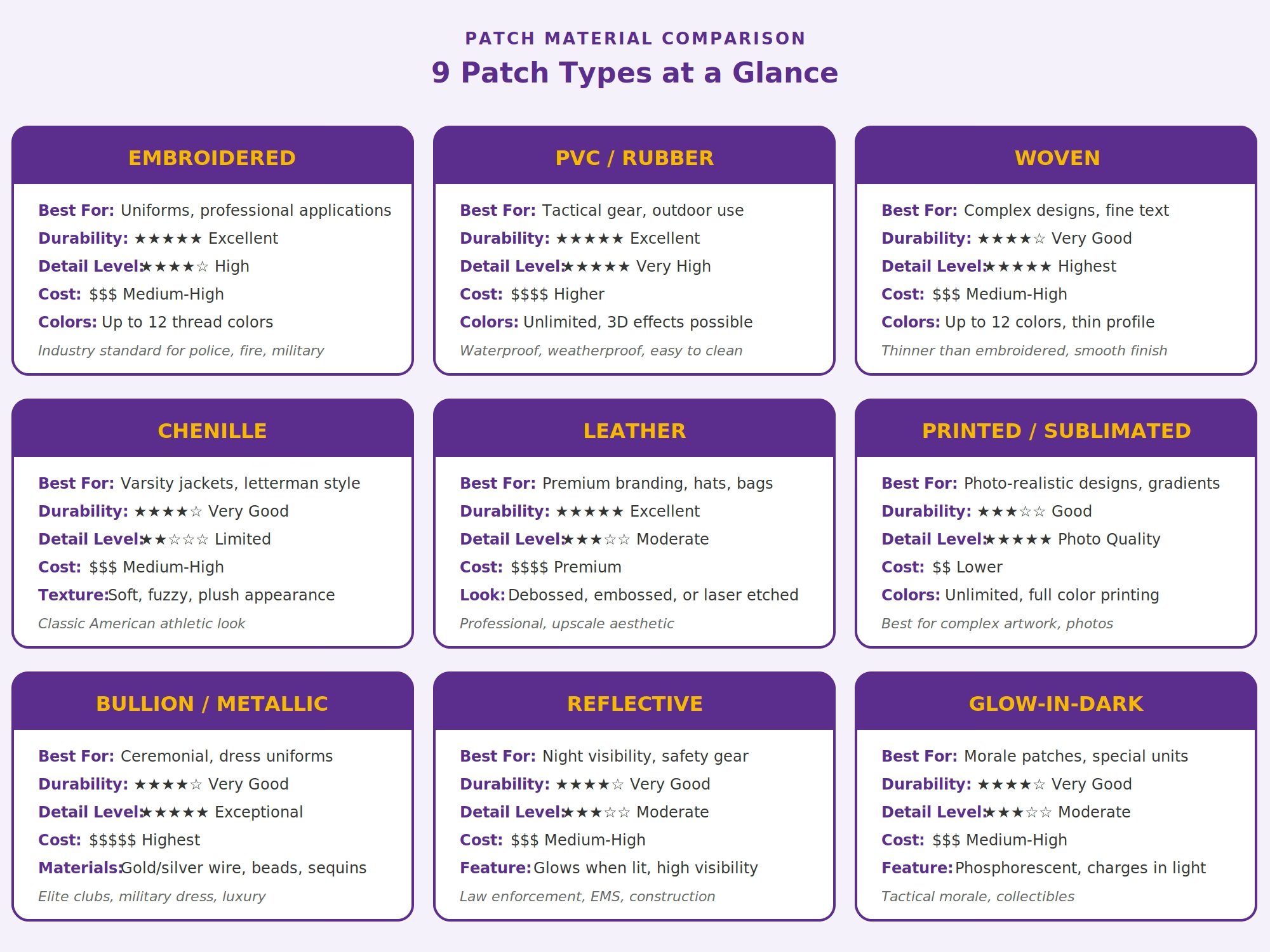
Patch material comparison infographic showing 9 custom patch types: embroidered, pvc/rubber, woven, chenille, leather, printed/sublimated, bullion/metallic, reflective, and glow-in-dark. Each type displays best uses, durability rating, detail level, cost range, and special features for professional uniform and custom patch applications.

Compare 9 patch material types at a glance. This infographic breaks down embroidered, PVC, woven, chenille, leather, printed, bullion, reflective, and glow-in-dark patches by durability, detail level, cost, and best applications. Essential reference for choosing the right custom patch material for uniforms, tactical gear, or promotional use.
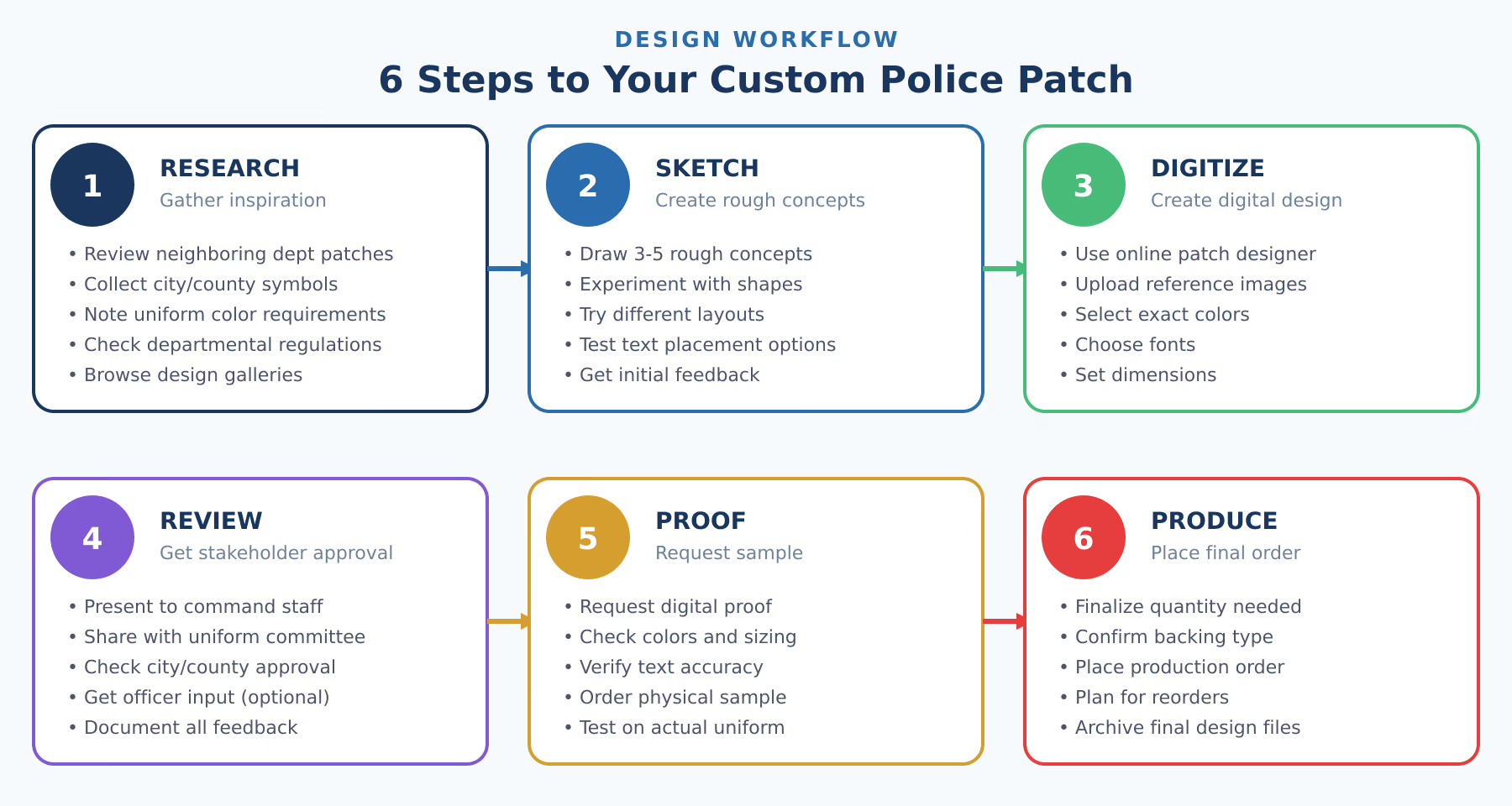
Six-step workflow diagram for designing a custom police patch. Step 1 research (navy): review neighboring department patches, collect city and county symbols, note uniform color requirements, check departmental regulations, browse design galleries. Step 2 sketch (blue): draw 3-5 rough concepts, experiment with shapes, try different layouts, test text placement options, get initial feedback. Step 3 digitize (green): use online patch designer, upload reference images, select exact colors, choose fonts, set dimensions. Step 4 review (purple): present to command staff, share with uniform committee, check city and county approval, get officer input, document all feedback. Step 5 proof (gold): request digital proof, check colors and sizing, verify text accuracy, order physical sample, test on actual uniform. Step 6 produce (red): finalize quantity needed, confirm backing type, place production order, plan for reorders, archive final design files. Timeline note indicates most departments complete this process in 2-4 weeks.

Complete 6-step workflow for designing professional police patches. Covers research and inspiration gathering, sketching concepts, digital design creation, stakeholder review and approval, proofing and sampling, and final production ordering. Includes actionable checklist items for each phase to guide departments from initial concept to finished patches in 2-4 weeks.
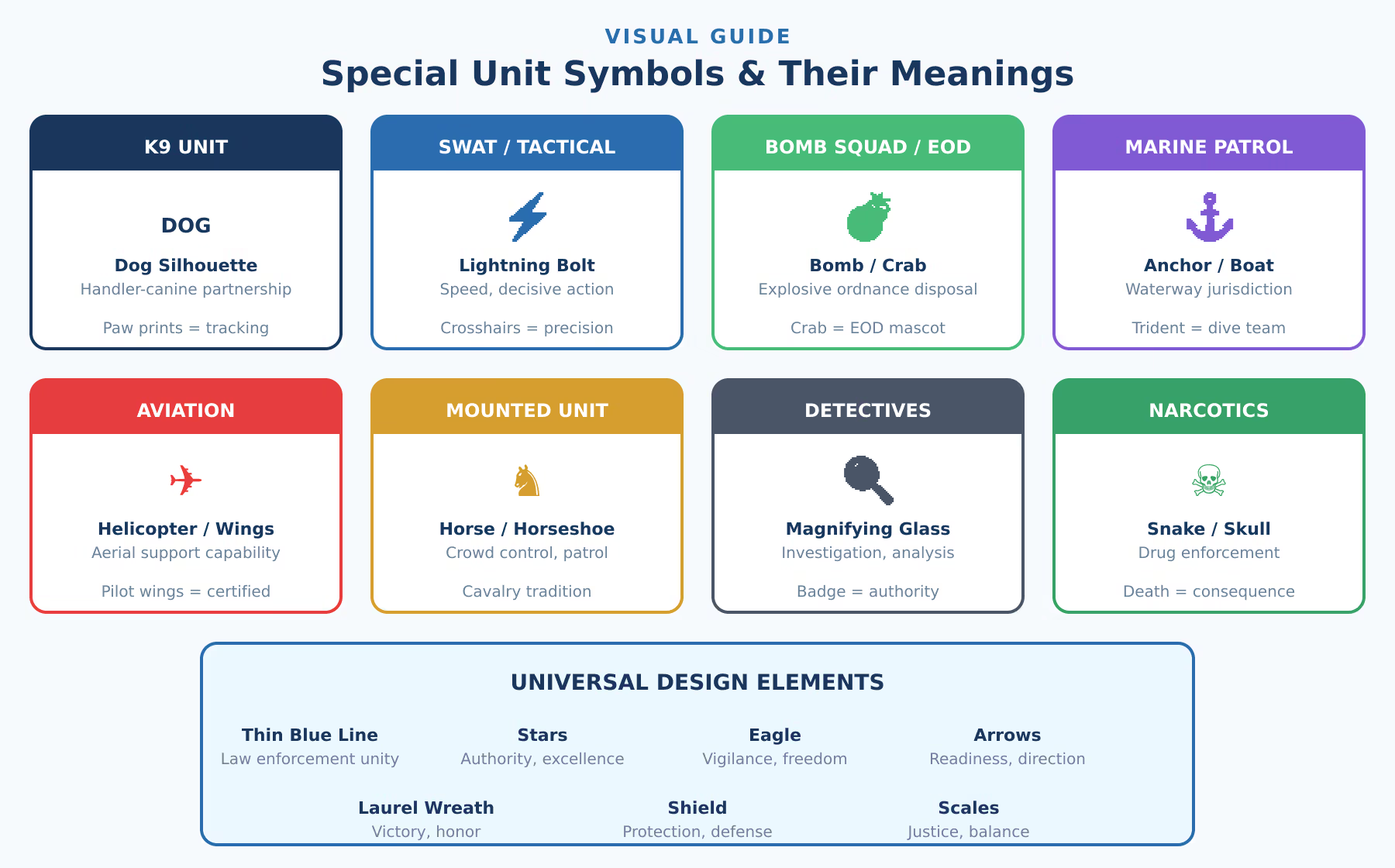
Visual guide showing special law enforcement unit symbols and their meanings. Eight color-coded cards for k9 unit (dog silhouette representing handler-canine partnership), swat/tactical (lightning bolt for speed and decisive action), bomb squad/eod (bomb and crab as eod mascot), marine patrol (anchor for waterway jurisdiction), aviation (helicopter and wings for aerial support), mounted unit (horse for crowd control and cavalry tradition), detectives (magnifying glass for investigation), and narcotics (skull representing drug enforcement consequences). Bottom section shows universal design elements: thin blue line for law enforcement unity, stars for authority, eagle for vigilance, arrows for readiness, laurel wreath for victory, shield for protection, and scales for justice.

Complete visual reference guide to law enforcement specialty unit patch symbols. Eight unit-specific cards covering K9, SWAT, Bomb Squad/EOD, Marine Patrol, Aviation, Mounted, Detectives, and Narcotics units with their signature imagery and symbolism. Includes universal design elements like thin blue line, stars, eagle, arrows, laurel wreath, shield, and scales of justice that can be combined across all patch designs.
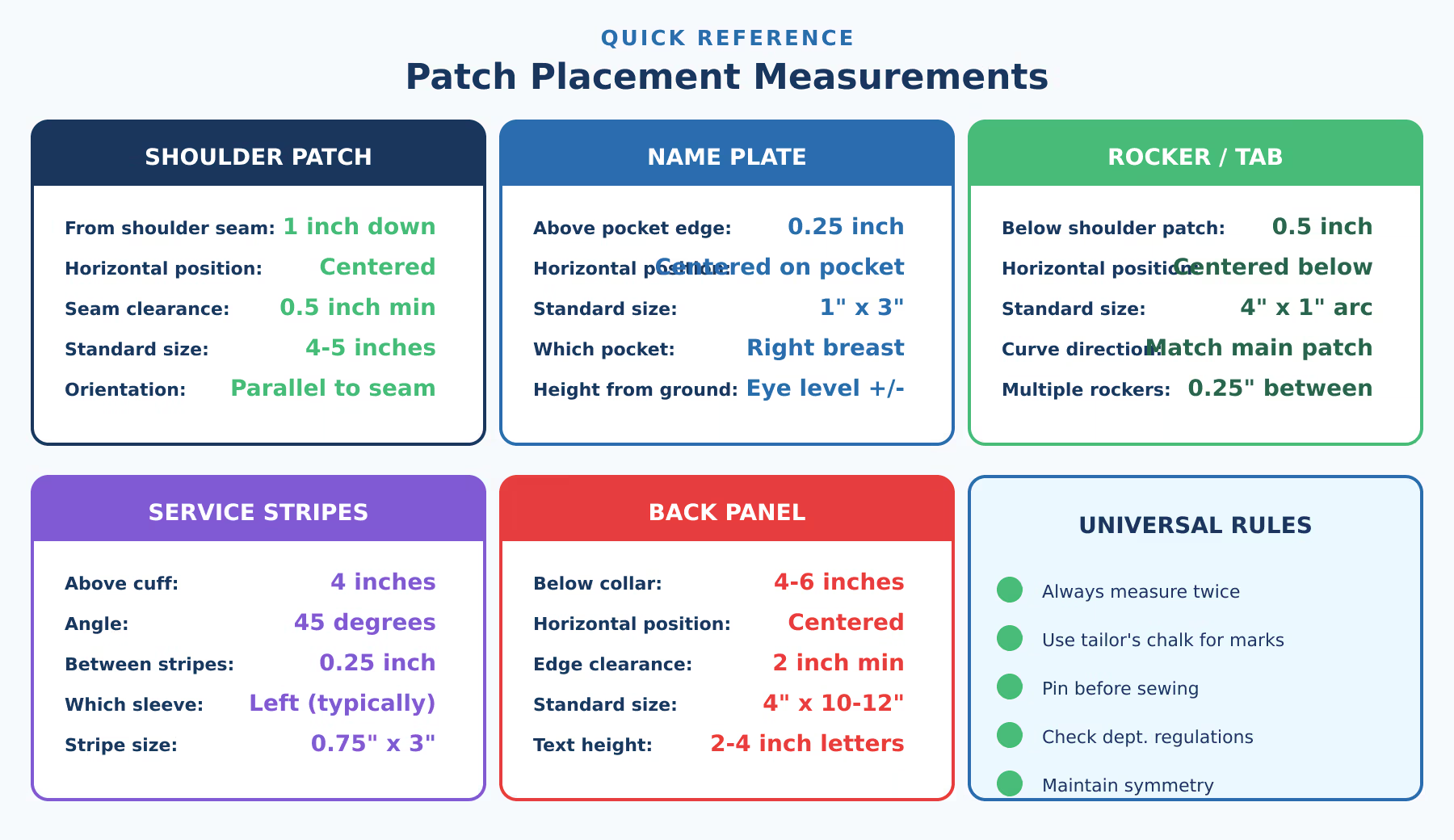
Quick reference chart showing exact patch placement measurements for police uniforms. Shoulder patch: 1 inch below seam, centered, 0. 5 inch minimum seam clearance, 4-5 inch standard size, parallel to seam. Name plate: 0. 25 inch above pocket edge, centered on right breast pocket, 1x3 inch size. Rocker tab: 0. 5 inch below shoulder patch, centered, 4x1 inch arc size, 0. 25 inch between multiple rockers. Service stripes: 4 inches above cuff, 45-degree angle, left sleeve, 0. 75x3 inch stripes. Back panel: 4-6 inches below collar, centered, 2 inch minimum edge clearance, 4x10-12 inch size. Universal rules: measure twice, use tailor's chalk, pin before sewing, check department regulations, maintain symmetry.

Complete patch placement measurement guide for law enforcement uniforms. Six color-coded reference cards showing exact measurements for shoulder patches (1 inch below seam), name plates (0.25 inch above pocket), rocker tabs (0.5 inch spacing), service stripes (4 inches above cuff at 45-degree angle), and back panels (4-6 inches below collar). Includes universal placement rules for professional results.
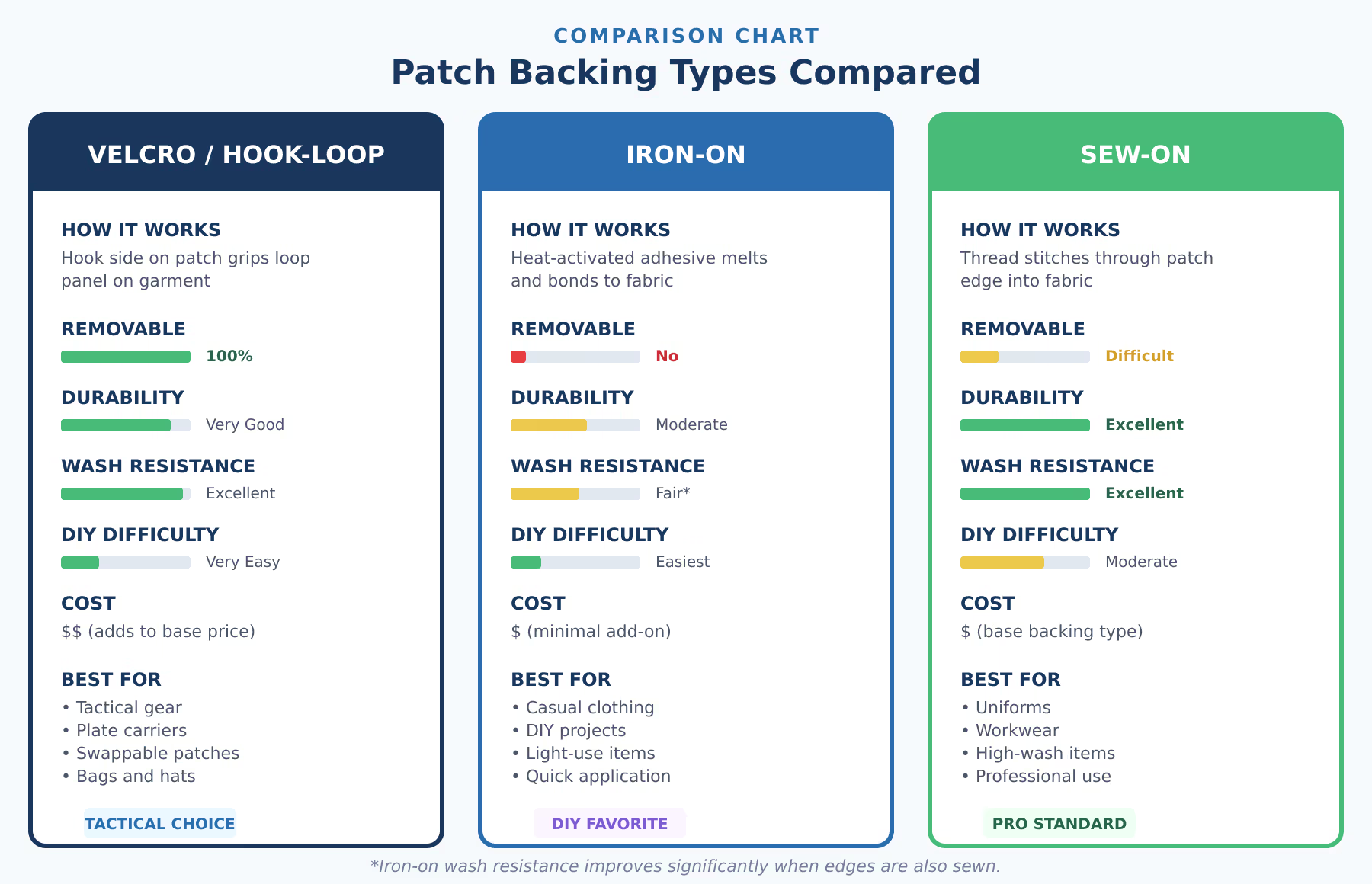
Comparison chart of three patch backing types. Velcro/hook-loop: 100% removable, very good durability, excellent wash resistance, very easy diy, moderate cost, best for tactical gear, plate carriers, and swappable patches. Iron-on: not removable, moderate durability, fair wash resistance, easiest diy application, lowest cost, best for casual clothing and diy projects. Sew-on: difficult to remove, excellent durability, excellent wash resistance, moderate diy difficulty, base cost, best for uniforms, workwear, and professional use. Velcro is the tactical choice, iron-on is the diy favorite, and sew-on is the professional standard.

Side-by-side comparison of velcro, iron-on, and sew-on patch backings. Velcro offers 100% removability for tactical gear. Iron-on provides the easiest DIY application for casual wear. Sew-on delivers maximum durability for professional uniforms. Each backing type rated on removability, durability, wash resistance, DIY difficulty, cost, and best use cases.
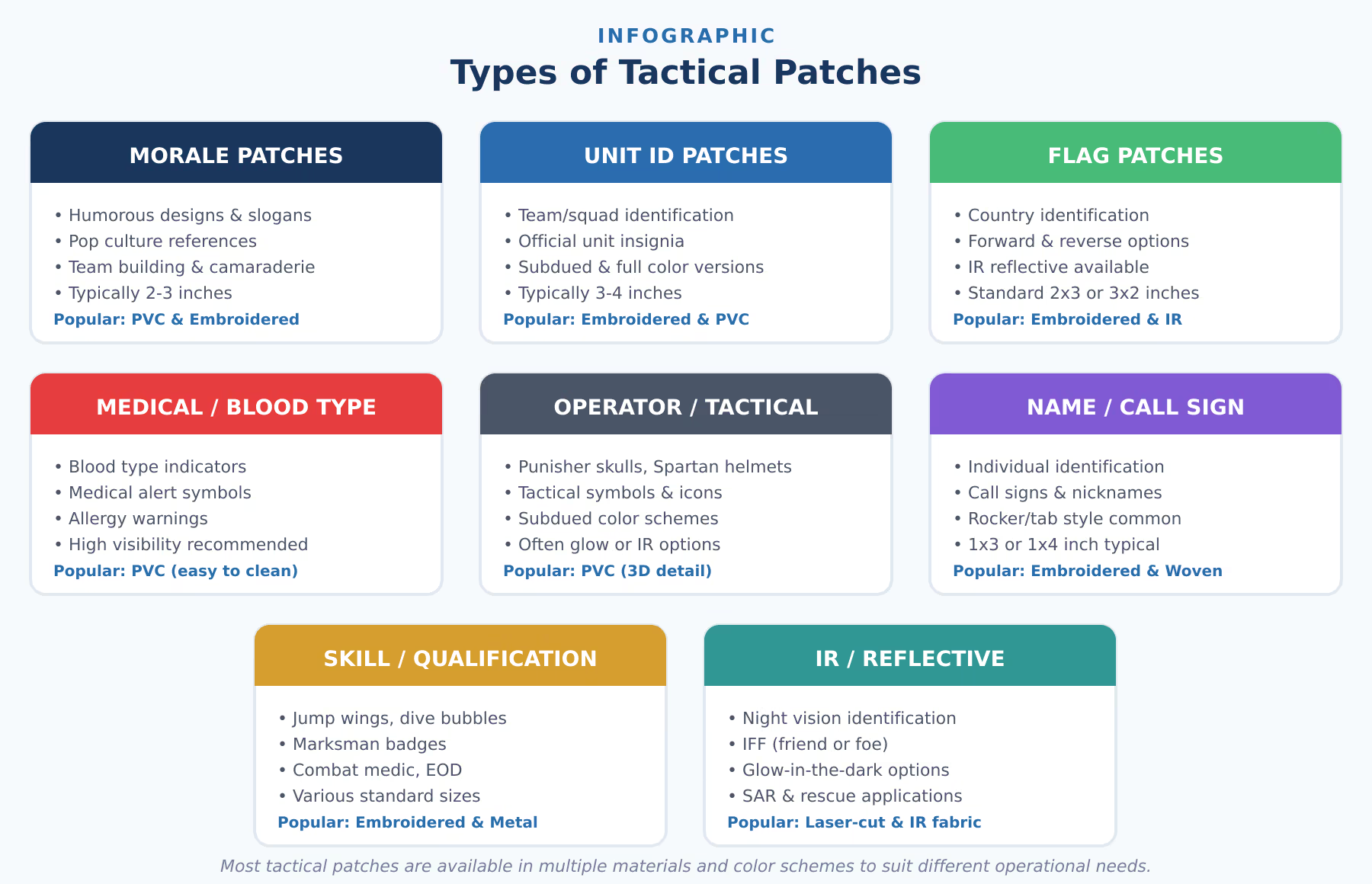
Infographic showing eight types of tactical patches: morale patches (humorous designs, 2-3 inches, pvc or embroidered), unit id patches (team identification, 3-4 inches), flag patches (country id with ir options), medical/blood type (high visibility pvc), operator/tactical (skulls and tactical symbols in subdued colors), name/call sign (rocker style 1x3-4 inches), skill/qualification (jump wings, marksman badges), and ir/reflective (night vision identification for sar applications).

Tactical patches fall into eight main categories: morale patches for team building, unit ID for squad identification, flag patches for nationality, medical patches for blood type and alerts, operator patches with tactical symbols, name tapes for individual ID, skill badges for qualifications, and IR patches for night operations.