Professional Development
Police Ranks Explained: Complete Hierarchy Guide
Understand the complete rank structure from officer to chief and how it affects badge ordering.



Complete Guide for Department Administrators, Chiefs, and Procurement Officers (2025)
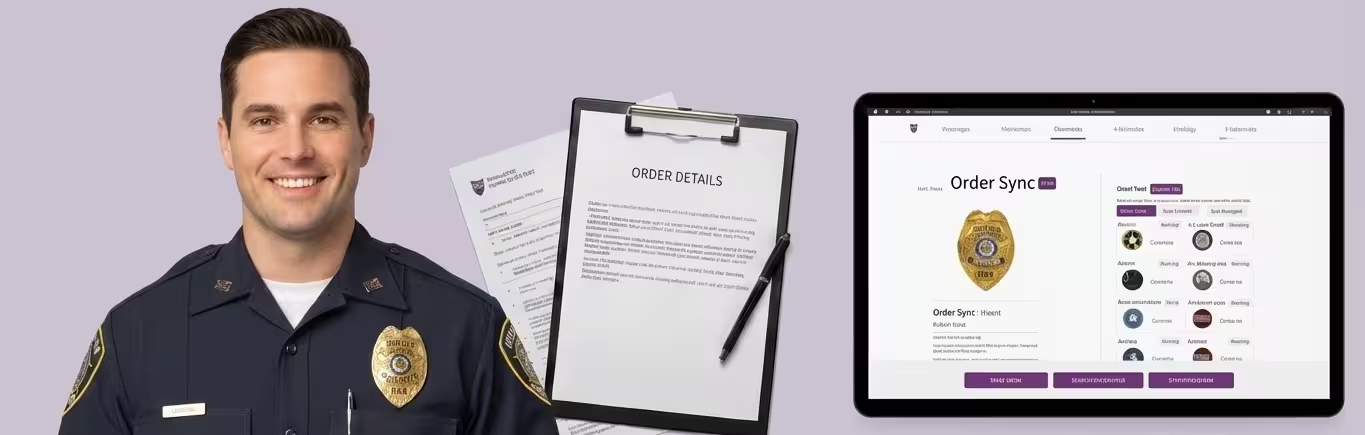
To order custom police badges for your department, you need to: (1) gather department specifications including your official seal, rank structure, and badge numbering system, (2) choose a badge style and finish that matches your department’s tradition, (3) determine quantities for all ranks and positions, (4) submit your design through an online badge designer or provide existing badges for reproduction, (5) review proofs before production, and (6) allow 8-12 weeks for standard manufacturing. Most departments can complete the preparation work in 2-3 weeks, with production typically taking another 8-12 weeks after final approval.
Ordering custom police badges for your department involves more than picking a design and placing an order. The process requires coordination between multiple stakeholders, attention to departmental specifications, and planning ahead to make sure badges arrive when you need them. Understanding each phase helps administrators avoid delays and ensures the final product meets professional standards.
Most law enforcement agencies order badges in three situations: establishing a new department, replacing worn or damaged badges, and ordering for promotions or new hires. Each situation has different requirements, but the fundamental ordering process stays consistent. The police rank structure in your department will significantly influence your badge order, since different ranks typically require different badge sizes and sometimes distinct designs.
Badge manufacturers work with thousands of law enforcement agencies, from small municipal departments to large state agencies. This means they understand the unique requirements of police badges—security considerations, durability needs, and the importance of accurate seal reproduction. Whether you’re ordering patrol badges or command staff badges, the core ordering principles apply across the board.
The most successful badge orders start with thorough preparation. Departments that gather all specifications before contacting a manufacturer complete the process much faster than those who begin ordering before finalizing their requirements. This preparation includes having your department seal in high-resolution format, a complete rank structure document, and a clear badge numbering system. One mid-sized police department we worked with cut their total ordering time nearly in half simply by having everything organized before their first call.
Before contacting any badge manufacturer, department administrators should compile a comprehensive information package. This preparation prevents delays during the design phase and ensures accurate quotes. The following categories cover the essential information needed for any police badge order.
Your department seal or emblem serves as the centerpiece of most badge designs. Gather the highest resolution version available—vector files (AI, EPS, or SVG formats) produce the best results for badge reproduction. If you only have a raster image (JPG or PNG), make sure it’s at least 300 DPI at print size. The department’s official name, city or county designation, and state should be documented exactly as they should appear on the badge.
Document every rank in your department, from entry-level officers to command staff. For each rank, note the current number of personnel and any anticipated additions. Consider ordering 10-15% extra badges at each rank level to accommodate promotions, new hires, and replacements without requiring a separate order. Different agency types—municipal police, sheriff’s departments, and state agencies—typically have different rank structures and badge traditions.
| Information Category | Required Items | Format/Notes | Who Provides |
|---|---|---|---|
| Department Seal | Official emblem, seal, or logo | Vector (AI, EPS) preferred; 300+ DPI minimum | City/County Graphics Dept. |
| Department Name | Exact text as it appears officially | Include abbreviations and full names | Chief/Administration |
| Rank Structure | All ranks from officer to chief | Include specialty units (K-9, SWAT, etc.) | HR/Personnel Division |
| Personnel Counts | Current and projected headcount | By rank, include 10-15% buffer | HR/Budget Office |
| Badge Numbers | Numbering system/range for each officer | Spreadsheet format preferred | Records Division |
| Budget Authorization | Approved budget amount, PO capability | Include payment terms needed | Finance/Procurement |
Badge style selection balances department tradition with practical considerations. Most law enforcement agencies maintain badge designs established by their predecessors, though some choose to update designs during organizational changes or centennial celebrations. Understanding the options available helps administrators make informed decisions that honor tradition while meeting contemporary needs.
Three primary shapes dominate law enforcement badges. Shield-shaped badges are the most common nationwide, representing the majority of police badges in use today. These provide ample space for department seals and text while projecting traditional authority. Shield badges work well for departments seeking classic designs. Star badges carry strong western heritage and remain popular with sheriff’s departments and some state agencies. Oval badges offer a modern aesthetic and work particularly well for departments updating their image.
Most police badges use brass construction with various plating finishes. Gold-tone finishes typically indicate command ranks and create a distinguished appearance. Silver-tone finishes commonly designate patrol and detective ranks. Nickel finishes offer durability with a slightly different aesthetic than silver. Dual-tone combinations mixing gold and silver provide visual distinction between elements. Some departments use black tactical finishes for specialty units like SWAT teams.
When reproducing existing badges, ask the manufacturer to match your current badges exactly. Many departments provide a physical sample badge for color matching and dimensional accuracy. This matters especially for departments with long histories where badge styles have become part of organizational identity. Manufacturers can often improve quality while maintaining the traditional appearance officers expect.
The finish hierarchy varies by region. East Coast departments traditionally favor silver for patrol with gold reserved for command. West Coast agencies often use gold more liberally across ranks. Midwest departments frequently employ dual-tone designs. Understanding your regional traditions—or intentionally departing from them—should inform your finish selections.
Whether you’re ordering badges for a new department, replacing existing badges, or ordering for new personnel, the process follows six fundamental steps. Each step builds on the previous one, and completing them in sequence keeps things running smoothly.
Begin by collecting all the information detailed in Section 2. Assign responsibility for each category to appropriate department personnel. Set a deadline for information gathering—typically 1-2 weeks allows time for locating seal artwork and compiling personnel data. Create a central document or folder where all materials can be organized.
Review your existing badges (if any) and determine whether to reproduce them exactly or create a new design. Browse badge styles and options to understand what’s available. Contact your selected manufacturer with your requirements and request a detailed quote. Quality manufacturers provide account managers who guide you through the process.
Using the manufacturer’s online design tool or working with their design team, create your badge layout. Upload your department seal, enter text specifications, and select finishes. The design phase typically involves several iterations as you refine details. Most manufacturers provide digital proofs within 24-48 hours of receiving your specifications.
Circulate digital proofs to stakeholders for review. Command staff should verify rank designations and overall appearance. Administrative staff should check spelling, numbers, and quantities. Request corrections as needed—reputable manufacturers accommodate reasonable revisions without additional charges. Document final approval in writing.
Submit your purchase order or complete payment through the manufacturer’s system. Government and institutional buyers typically receive NET 30 payment terms upon credit approval. Confirm your order details one final time before production begins. You should receive an order confirmation with your production timeline within 24 hours.
Manufacturing begins with die creation for new designs, followed by badge production, enamel work, plating, and quality inspection. Standard production takes 8-12 weeks. Expedited service (6-8 weeks) is available for urgent needs at additional cost. You’ll receive tracking information when badges ship. Upon delivery, verify quantities and inspect quality before distribution.
Successful badge procurement requires realistic timeline expectations and accurate budget planning. Understanding typical costs and production schedules helps administrators coordinate with finance departments and plan around academy graduations, promotional ceremonies, and department reorganizations.
Working backward from your needed delivery date provides the clearest planning framework. If badges must arrive for a June academy graduation, begin the ordering process in January at the latest. This allows 2-4 weeks for preparation, 1-2 weeks for design approval, and 8-12 weeks for production. Adding a 2-week buffer protects against unexpected delays.
Departments ordering for ongoing needs rather than specific events have more flexibility. Consider establishing an annual badge ordering cycle aligned with your fiscal year. This approach allows budget planning, consolidates orders for volume pricing, and ensures consistent availability for new hires and promotions throughout the year.
A county sheriff’s office we worked with moved from ordering badges reactively (when someone got promoted or hired) to ordering proactively once a year. They estimate their annual needs in January, place one consolidated order in February, and receive badges in April. This gave them better pricing through volume discounts and eliminated the rush fees they used to pay for last-minute promotion badges. Their procurement officer said the annual approach “just makes everything simpler.”
Individual badge costs typically range from $50-$150 depending on size, complexity, and finish. Volume discounts can significantly reduce per-badge costs—most manufacturers offer tiered pricing, with meaningful savings beginning around 10+ badges and increasing at higher quantities. A department ordering 100 badges will see noticeably better per-unit pricing than one ordering 10.
When calculating budget requirements, factor in not just duty badges but also wallet badges for detectives and plainclothes officers, miniature collar pins for dress uniforms, and display cases for retirements and awards. These accessories typically add 15-25% to total badge orders. Also plan for ongoing replacement—badges get lost, damaged, or need updating as officers transfer or get promoted.
Avoid the temptation to order only the exact number of badges currently needed. Departments that order without a buffer inevitably face rush orders for unexpected new hires or replacements. These rush orders cost significantly more per badge and disrupt budget planning. A 10-15% buffer on initial orders pays for itself within the first year through avoided rush fees and volume pricing retention.
Learning from other departments’ experiences helps avoid costly errors and delays. The following mistakes come up frequently in police badge procurement and are entirely preventable with proper planning.
Insufficient lead time causes more badge ordering problems than any other factor. Departments that wait until 4-6 weeks before needed delivery often face expensive rush charges or miss their deadlines entirely. Always plan for standard production times and add buffer for review cycles.
Poor seal artwork quality results in badges that don’t match expectations. Low-resolution images appear pixelated when reproduced on metal. If you don’t have vector artwork, ask your city or county graphics department—they typically maintain official seal files. Some manufacturers can recreate seals from high-quality photos, but this adds time and cost.
Incomplete specifications lead to design revisions that delay production. Make sure you’ve documented all ranks, specialty units, and numbering requirements before beginning the design phase. Departments with complex structures—multiple divisions, specialty units, or federal agency operations—should allocate extra planning time.
Skipping the approval process creates problems when badges arrive and don’t meet expectations. Always circulate digital proofs to relevant stakeholders. In larger departments, consider having representatives from patrol, investigations, and command each review designs relevant to their units.
Get the comprehensive PDF guide with printable checklists, timeline calculator, and budget planning worksheets for your department.
The complete process typically takes 10-14 weeks from initial planning to delivery. This includes 2-4 weeks for preparation and design, plus 8-12 weeks for production. Expedited production (6-8 weeks) is available for urgent orders at additional cost. Planning should begin 16-20 weeks before badges are needed for events like academy graduations or promotional ceremonies.
You’ll need your department seal in high-resolution format (preferably vector), exact department name and jurisdiction, complete rank structure, personnel counts by rank, badge numbering system, and budget authorization. You’ll also need to decide on badge shape, size by rank, metal finish, and attachment method before finalizing designs.
Yes, reputable badge manufacturers can reproduce existing badges with high accuracy. Providing a physical sample badge enables color matching and dimensional accuracy. The manufacturer may suggest minor improvements to quality or durability while maintaining traditional appearance. This works well for departments with established badge designs that want consistent replacement badges.
Yes, most badge manufacturers accept purchase orders from government agencies and qualified institutional buyers. NET 30 payment terms are typically available following credit approval. Alternative payment methods include credit cards, wire transfer, ACH, and checks. The credit approval process is usually straightforward for established government agencies.
Volume discounts vary by manufacturer but can be substantial for larger orders. Savings typically begin at 10+ badges and increase at higher quantity tiers. Departments can maximize savings by consolidating orders across all ranks and divisions rather than placing multiple smaller orders throughout the year. Contact manufacturers directly for current pricing tiers.
Found this helpful? Share with other department administrators and procurement officers.
Ordering custom police badges for your department requires thoughtful planning, clear communication, and realistic timeline expectations. By gathering complete specifications before contacting manufacturers, building in adequate lead time, and ordering buffer quantities for future needs, administrators can ensure smooth procurement that delivers quality badges when they’re needed.
The six-step process outlined in this guide—gathering requirements, selecting styles, designing, reviewing, ordering, and receiving delivery—provides a proven framework for successful badge procurement. Whether you’re establishing a new department, replacing aging badges, or ordering for new personnel, following these steps helps avoid common pitfalls and ensures your officers receive badges that represent your department with pride and professionalism.